AI Automation vs Human Augmentation: How Enterprises Are Finding the Right Balance in 2026
A practical decision framework for enterprise leaders to determine when AI should fully automate tasks versus amplify human capabilities — with industry benchmarks, ROI data, and real-world examples from healthcare, finance, logistics, and retail.
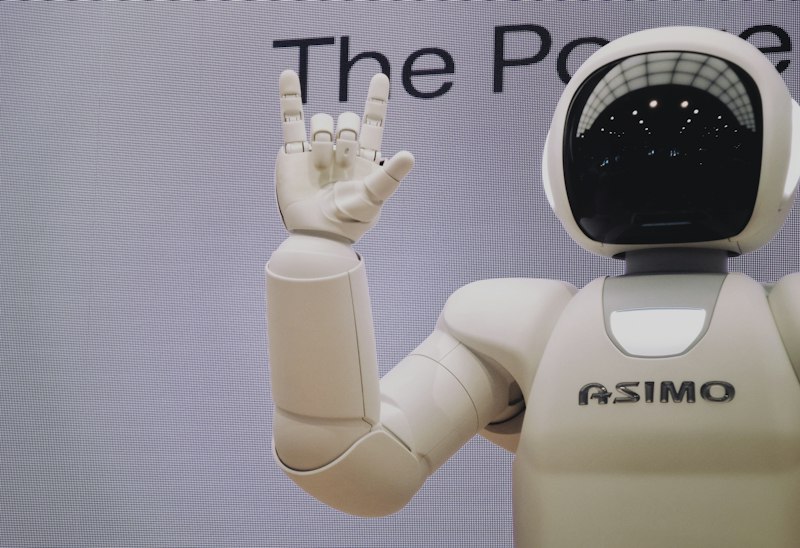
The most consequential question facing enterprise leaders in 2026 is not whether to adopt AI automation — it is when to automate, when to augment, and when to keep humans fully in control. AI automation vs human augmentation is reshaping workforce strategy across every industry vertical, and organizations that get this balance wrong face mounting costs, employee resistance, and widening competitive gaps.
According to McKinsey's 2025 State of AI report, enterprises that deliberately orchestrate the automation-augmentation boundary achieve 2.3x better productivity outcomes than those pursuing blanket automation. DigitalHubAssist works with organizations across healthcare, finance, logistics, retail, and telecommunications to build AI deployment strategies that maximize value while preserving the human judgment that customers and regulators require.
AI automation replaces repetitive, rule-based, or high-volume tasks with machine-driven processes that require no ongoing human intervention. Human augmentation — also called AI-assisted work — enhances human decision-making, creativity, and relationship management with AI tools that surface insights, reduce cognitive load, and accelerate execution. The distinction determines organizational structure, hiring strategy, and competitive positioning for years to come.
Why the AI Automation vs Human Augmentation Decision Matters in 2026
Executives who defaulted to "automate everything" in 2023 and 2024 are discovering painful tradeoffs. A Gartner survey published in early 2026 found that 41% of enterprises experienced unexpected quality degradation when fully automating customer-facing processes, compared to 12% who deployed hybrid human-AI models. Customers can detect AI-only interactions — and in industries where trust is the product, that detection carries a steep price.
Conversely, organizations that delayed AI adoption out of concern for workforce disruption now face a measurable capability gap. Forrester Research estimates that enterprises without meaningful AI automation in their operations face a 23% cost disadvantage against AI-native competitors by 2027. The strategic imperative is not a binary choice — it is a rigorous, task-by-task analysis of which approach delivers superior outcomes in each specific context.
DigitalHubAssist's consulting framework, refined across deployments spanning MedicalHubAssist, FinanceHubAssist, LogisticHubAssist, RetailHubAssist, TelcoHubAssist, and SocialNetHubAssist, identifies five dimensions that determine the optimal deployment mode for any enterprise workflow.
The Five-Dimension Framework for AI Deployment Decisions
Every enterprise task sits on a spectrum between full automation and purely human execution. Applying the following five-dimension framework helps organizations consistently place each workflow in the right zone — full automation, AI augmentation, or human-only — with evidence-based confidence rather than intuition.
1. Variability tolerance. Tasks with high input variability and no single correct output — complex negotiations, clinical diagnosis, strategic planning, creative direction — favor augmentation. Tasks with low variability and a defined correct output — invoice matching, compliance document classification, network anomaly alerting, fraud transaction scoring — favor automation. Accenture's Technology Vision 2025 report confirmed that tasks in the low-variability category can be automated with 92–98% accuracy using current LLM and ML pipelines, making the labor-cost case straightforward.
2. Regulatory accountability. In healthcare, financial services, and legal operations, a human must remain in the decision loop for liability purposes. MedicalHubAssist deployments at hospital networks use AI to draft clinical documentation and surface diagnostic flags — but a licensed clinician reviews and approves every patient record before it enters the EHR. In retail and logistics, regulatory constraints are lower, enabling automation rates of 70–85% across eligible workflows.
3. Empathy and relationship value. Customers accept AI in self-service, information retrieval, and routine transactions. They expect humans in high-stakes moments: a denied insurance claim, a complex financial advisory session, a post-surgical follow-up call. HubSpot's 2025 State of Service report found that 78% of customers want AI to help them reach answers faster, but 64% prefer a human for emotionally charged interactions. AI should identify and route these contacts, not attempt to resolve them autonomously.
4. Error cost asymmetry. When an automation error is cheap to detect and reverse, full automation is appropriate. When an error is costly, irreversible, or visible to customers or regulators, augmentation is the safer deployment mode. FinanceHubAssist applies this dimension precisely in credit risk assessment: AI models score loan applications in milliseconds, but human underwriters review edge cases and borderline decisions, reducing false-denial rates and regulatory exposure simultaneously without sacrificing throughput.
5. Improvement velocity. Augmented workflows improve continuously as AI models learn from human decisions made in real time. Fully automated workflows improve only when the model is explicitly retrained on new data. In high-change environments — new product categories, evolving regulatory requirements, emerging markets — augmentation delivers faster adaptation cycles. LogisticHubAssist leverages this principle in dynamic route optimization: AI generates routes while drivers contribute real-time feedback that refines the model weekly, producing better results than pure automation would achieve in months of batch retraining.
Industry Applications: Where Automation Ends and Augmentation Begins
The five-dimension framework produces different automation-augmentation boundaries across verticals — a reflection of each industry's regulatory environment, customer expectations, and process variability. The following examples illustrate how the framework translates into practice at scale.
Healthcare: MedicalHubAssist automates pre-authorization processing, achieving an 85% straight-through processing rate with zero physician time required per claim. Simultaneously, it augments clinical documentation workflows, reducing note completion time by 30% while the physician retains full authorship and liability. The automation-augmentation boundary follows the regulatory accountability and error cost dimensions precisely — no inference touches the patient record without physician sign-off.
Finance: FinanceHubAssist automates transaction fraud screening at sub-100ms decision speeds on 98% of transactions, then flags the 2% requiring human review based on pattern complexity and dollar exposure. For portfolio construction, AI augments wealth advisors by surfacing allocation recommendations and stress-test scenarios, while advisors apply the client context and relationship knowledge that transforms a mathematical output into a trusted financial plan.
Logistics: LogisticHubAssist automates customs documentation and warehouse pick-path optimization — both low-variability, low-empathy, high-volume workflows — while augmenting carrier negotiations and shipment exception management, where expert judgment about supplier relationships and downstream customer impact adds value that machine inference cannot yet replicate. This split reduces total logistics cost by 18% without eliminating the human expertise that carrier and customer relationships demand.
Retail: RetailHubAssist automates markdown pricing algorithms, inventory replenishment triggers, and tier-1 customer service queries. Category management and private-label development remain augmented, where merchant judgment about trends, aesthetics, and supplier partnerships produces outcomes that outperform models trained only on historical sales data. The result is a retail organization that is leaner in back-office cost and richer in strategic merchant capability.
Building an Enterprise AI Automation Strategy That Delivers Measurable ROI
Three implementation principles distinguish high-ROI deployments from expensive experiments that stall after the proof-of-concept stage.
Start with task audits, not technology purchases. Before selecting any AI platform or vendor, catalog every role's tasks using the five dimensions above. Most knowledge worker roles contain a mixture of automation candidates, augmentation candidates, and activities that should remain human-only. Purchasing a platform before completing this audit guarantees misalignment between tool capability and actual deployment needs — the most common reason enterprise AI projects fail to scale past pilot.
Measure augmentation ROI differently from automation ROI. Automation ROI is primarily cost reduction: fewer labor hours per unit of output, lower error rates, faster throughput. Augmentation ROI is primarily revenue and quality improvement: better decisions, higher customer satisfaction scores, faster skill development for new hires, and reduced voluntary attrition among experienced staff. Many CFOs apply automation metrics to augmentation investments and incorrectly conclude the latter is underperforming. DigitalHubAssist establishes separate KPI frameworks for each deployment mode at the outset of every engagement to prevent this measurement error.
Design for human-AI handoffs. The highest-value moments in enterprise AI deployments are often the transitions between automated pipelines and human reviewers. Poorly designed handoffs — where AI output is not interpretable, context is stripped, or confidence scores are absent — negate the benefits of both components. TelcoHubAssist network operations center deployments, for example, use AI to classify and prioritize alerts, but the interface and handoff logic were co-designed with NOC engineers to ensure every human decision is fully informed, not merely notified that something requires attention.
Frequently Asked Questions About AI Automation vs Human Augmentation
Which enterprise functions are best suited for full AI automation in 2026?
Functions with the highest automation maturity include accounts payable processing, compliance document classification, IT service desk tier-1 ticket resolution, fraud transaction screening, inventory replenishment triggering, and appointment scheduling. These share three traits: high transaction volume, low process variability, and measurable correctness criteria. McKinsey's 2025 State of AI report estimates that 60–70% of tasks within these functions can be fully automated today with current AI capabilities and acceptable error rates.
How do enterprises avoid automating the wrong tasks?
The most common mistake is automating tasks that are easy to automate rather than tasks that are expensive to perform manually. Applying the five-dimension framework and prioritizing tasks where error cost is low, variability is minimal, and regulatory accountability is limited produces a ranked automation roadmap aligned with business value rather than technical feasibility. Avoid automating customer interactions with high emotional weight, even when the underlying information retrieval logic is relatively simple.
What metrics should businesses use to evaluate AI augmentation ROI?
Augmentation investments should be measured on decision quality improvement (error rate reduction, recommendation acceptance rate by human reviewers), employee throughput (tasks completed per hour, time-to-resolution), and downstream business outcomes (customer satisfaction scores, revenue per employee, new-hire ramp time, employee retention). Research from Forrester indicates that augmentation reduces new hire time-to-proficiency by 40–60% in knowledge-intensive roles — a compounding benefit as organizations scale.
How does the automation-augmentation boundary shift as AI capabilities improve?
The boundary is not fixed. Tasks that required human augmentation in 2023 — such as first-pass contract review and basic medical coding — are candidates for full automation in 2026 as model accuracy has crossed the threshold of acceptable error rates. Enterprises should build their AI deployment governance with quarterly review cycles to evaluate whether augmented workflows have reached accuracy and reliability levels that qualify them for full automation. DigitalHubAssist embeds this governance process into every multi-year engagement.
Can small and mid-sized businesses apply the same automation-augmentation framework as large enterprises?
Yes. The five-dimension framework scales to organizations of any size, though implementation resources and risk tolerance differ. SMBs typically begin with two or three high-impact automation candidates — invoice processing, appointment scheduling, email triage — and one or two augmentation use cases, such as sales outreach personalization or customer support response drafting. This phased approach generates measurable ROI within 60–90 days and builds organizational AI literacy before broader deployment. DigitalHubAssist's SMB-focused GPT strategy engagements follow this staged model explicitly.
The Competitive Advantage of Getting the Balance Right
Enterprises that apply systematic discipline to the automation-augmentation boundary outperform competitors on three dimensions simultaneously: they reduce operational cost through targeted automation, improve output quality by keeping human judgment in high-stakes decisions, and retain the experienced employees that organizations relying on pure automation lose to frustration or redundancy anxiety.
According to Accenture's Future of Work 2026 report, companies with mature human-AI collaboration models report 35% higher employee engagement scores and 28% lower voluntary turnover compared to organizations pursuing pure automation strategies. The evidence across every vertical DigitalHubAssist serves — from MedicalHubAssist and FinanceHubAssist to RetailHubAssist and LogisticHubAssist — confirms that augmentation is not a concession to automation hesitancy. It is a deliberate, high-ROI strategy in its own right.
Organizations ready to build a rigorous AI deployment framework can explore additional resources on the DigitalHubAssist blog or contact DigitalHubAssist directly to schedule an AI readiness assessment tailored to their industry vertical and operational footprint.