AI Retail Personalization: How RetailHubAssist Drives Revenue Through Predictive Recommendations and Dynamic Pricing in 2026
AI retail personalization is the defining competitive advantage for consumer-facing businesses in 2026. Discover how RetailHubAssist combines predictive product recommendations, customer lifetime value scoring, and AI dynamic pricing to drive conversion, increase average order value, and build lasting customer loyalty at enterprise scale.
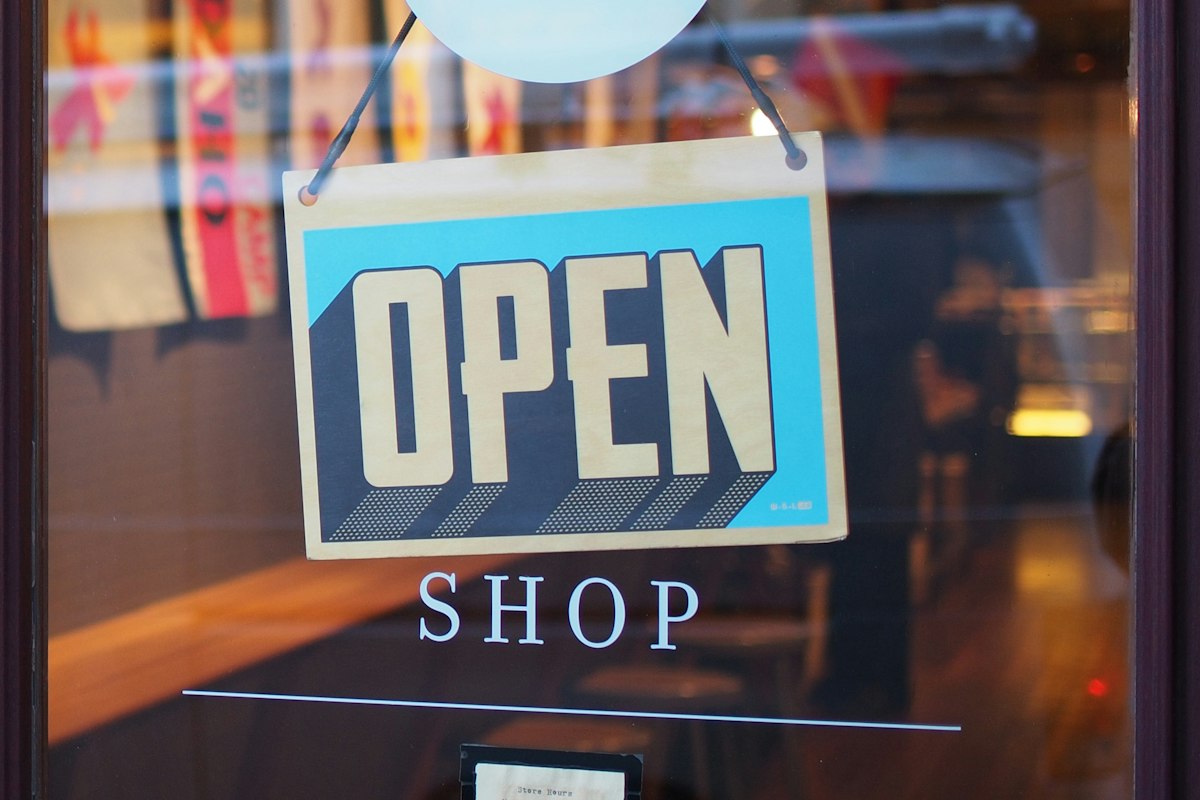
AI retail personalization has become the defining competitive advantage for consumer-facing businesses in 2026. As customer expectations rise and margins tighten, retailers that deploy machine learning to individualize every touchpoint—from product discovery to post-purchase follow-up—are outperforming peers by a wide margin. RetailHubAssist, DigitalHubAssist's vertical solution for the retail and e-commerce sector, delivers end-to-end AI personalization infrastructure that transforms anonymous browsing sessions into high-converting, loyalty-building experiences.
AI retail personalization is the application of machine learning and predictive analytics to tailor product recommendations, pricing, promotions, and content to individual shoppers in real time, based on their behavioral history, intent signals, and contextual data.
According to McKinsey & Company, personalization at scale can deliver five to eight times the return on marketing spend and lift sales by 10% or more. Yet fewer than 15% of retailers have deployed the data infrastructure and AI capabilities needed to personalize across channels simultaneously. RetailHubAssist closes that gap by combining predictive modeling, real-time decision engines, and dynamic pricing algorithms into a single, integrated platform built for enterprise retail operations.
What Is AI Retail Personalization—and Why Does It Matter in 2026?
Traditional retail segmentation grouped customers into broad cohorts—millennials, high-value buyers, seasonal shoppers. AI retail personalization replaces cohorts with individual-level models that update with every click, cart event, and purchase. Each customer receives a unique product feed, price point, and promotional trigger based on their real-time intent, purchase velocity, and predicted lifetime value.
Forrester Research reports that companies with mature personalization programs grow revenue at twice the rate of those with average personalization maturity. The mechanism is straightforward: when a shopper encounters a product assortment curated for their specific needs, dwell time increases, bounce rate decreases, and average order value rises. AI amplifies this effect by operating at a scale no human merchandising team can match—delivering millions of simultaneous personalization decisions per second across web, mobile, and in-store kiosks.
For retail CMOs and e-commerce leaders, the strategic imperative is clear: personalization is no longer a differentiator. It is table stakes. The differentiation now lies in the depth, speed, and accuracy of AI-driven personalization—precisely the capability RetailHubAssist is engineered to deliver. DigitalHubAssist positions this technology as the connective tissue between customer data strategy and measurable revenue outcomes.
How RetailHubAssist Delivers AI Retail Personalization at Scale
RetailHubAssist integrates with a retailer's existing commerce stack—whether Shopify, Salesforce Commerce Cloud, SAP, or a custom headless architecture—and ingests behavioral signals, transactional data, inventory feeds, and third-party intent data to build unified customer profiles. These profiles feed three core AI modules that operate in real time:
Predictive Product Recommendations. RetailHubAssist's recommendation engine uses collaborative filtering, content-based filtering, and deep neural networks to rank every product in the catalog by relevance to each individual shopper. The model updates in real time as the customer browses, ensuring that someone who adds a hiking boot to their cart immediately sees socks, trekking poles, and waterproof sprays—not yoga mats. Gartner projects that retailers deploying AI-native recommendation engines in 2025–2026 will see 20–30% improvements in average order value versus rules-based recommendation systems.
Customer Lifetime Value Scoring. Not all customers are created equal. RetailHubAssist scores each customer on predicted 12-month lifetime value, purchase frequency, and churn probability, enabling marketing teams to allocate acquisition and retention spend where it generates the highest return. High-LTV customers receive premium service touches; at-risk customers receive precisely timed win-back sequences before they lapse into inactivity.
Personalized Search and Browse Ranking. RetailHubAssist re-ranks search results and category pages for each shopper based on their behavioral history and real-time intent signals. A customer who consistently filters for sustainable materials will see eco-certified products ranked higher, even when they type a generic search term. Accenture research shows that 91% of consumers are more likely to shop with brands that recognize, remember, and provide relevant recommendations—personalized search is one of the highest-leverage touchpoints to deliver that recognition at scale.
DigitalHubAssist deploys RetailHubAssist with a typical go-live timeline of eight to twelve weeks, including data pipeline integration, model training on historical transaction data, A/B testing infrastructure, and merchandising team training. The platform handles peak loads exceeding 50,000 concurrent sessions without latency degradation, making it suitable for high-volume retail events such as Black Friday and seasonal sales campaigns.
Dynamic Pricing with AI: Maximizing Margins Without Losing Customer Trust
Dynamic pricing is one of the highest-ROI applications of AI in retail—and one of the most misunderstood. Done correctly, AI dynamic pricing adjusts prices in response to demand signals, competitive positioning, inventory levels, and customer segments in ways that feel fair and contextually justified. Done poorly, it erodes trust and triggers backlash. RetailHubAssist's dynamic pricing engine is designed around three guardrails that protect both margin and brand equity.
Demand Sensing. The model ingests real-time signals—search volume spikes, competitor price movements, weather patterns, and social media trends—and adjusts prices upward when demand outpaces supply and downward when inventory is at risk of aging. McKinsey's retail practice estimates that AI-driven demand sensing can reduce markdowns by 20–40% by anticipating slow-moving inventory before it accumulates at the end of a season.
Segment-Sensitive Pricing. RetailHubAssist distinguishes between price-sensitive and price-insensitive customer segments and applies differentiated pricing strategies to each. Loyalty program members may receive guaranteed price parity as a program benefit, while new visitors see market-rate pricing with promotional overlays designed to convert on the first purchase. This approach captures maximum willingness to pay without alienating the brand's most loyal base.
Competitive Intelligence Integration. The platform ingests competitor price feeds from tools such as Wiser, Prisync, and Skuuudle and adjusts positioning in near real time, ensuring that high-priority SKUs remain competitively priced during peak shopping events without triggering a race to the bottom on commoditized products where margin matters most.
Forrester notes that retailers using AI dynamic pricing report gross margin improvements of 2–5 percentage points, even after accounting for the revenue impact of targeted price reductions. For a retailer generating $500 million in annual revenue, that represents $10–25 million in annual margin recovery—a compelling ROI against the cost of implementation.
Omnichannel Personalization: Bridging Online and In-Store Experiences
The most sophisticated AI retail personalization programs extend beyond digital channels into physical stores. RetailHubAssist supports omnichannel personalization through clienteling applications for store associates, personalized email and SMS triggers based on in-store purchase behavior, and loyalty program integration that unifies online and offline purchase histories into a single customer record.
When a known customer enters a flagship store, a RetailHubAssist-powered clienteling application surfaces their online wishlist, past purchases, size preferences, and predicted next-best-product recommendations to the store associate—enabling a consultation-style experience that mirrors what a personal shopper would provide. Gartner research indicates that omnichannel customers spend 30% more per transaction than single-channel customers, making in-store personalization one of the highest-leverage retail investments available in 2026.
DigitalHubAssist's consulting practice works alongside retail leadership teams to design the data architecture, governance frameworks, and change management programs needed to make omnichannel personalization operationally sustainable. The goal is not only to implement technology but to embed AI retail personalization into the retailer's merchandising, marketing, and customer service operating model so that it compounds in value year over year.
AI Retail Personalization: Frequently Asked Questions
How long does it take to see measurable ROI from AI retail personalization?
Most RetailHubAssist deployments produce measurable lifts in conversion rate and average order value within the first 60–90 days of going live. Full ROI realization—including the compounding effect of improved customer lifetime value—typically becomes visible at the six-month mark as models mature on larger behavioral datasets. DigitalHubAssist structures all RetailHubAssist engagements with clear KPIs, A/B testing controls, and 90-day review checkpoints to ensure that results are measurable and attributable from day one.
Is AI retail personalization only viable for large enterprise retailers?
No. RetailHubAssist is architected to serve both enterprise retailers with multi-million SKU catalogs and mid-market retailers with focused assortments. Smaller retailers often see faster ROI because their customer data is less fragmented across legacy systems. DigitalHubAssist offers scaled deployment packages for mid-market retailers that deliver personalization infrastructure at a cost structure appropriate to businesses with $10–100 million in annual e-commerce revenue.
How does AI retail personalization handle data privacy regulations like GDPR and CCPA?
RetailHubAssist is built with privacy by design. The platform supports consent management integration, data minimization principles, and on-premise model training options for retailers operating under strict data residency requirements. DigitalHubAssist's implementation methodology includes a data governance audit as a prerequisite to deployment, ensuring that all personalization use cases are permissioned appropriately under GDPR, CCPA, and applicable state or national regulations.
Can AI personalization be applied to brick-and-mortar retail, not just e-commerce?
Yes. RetailHubAssist's omnichannel module supports in-store personalization through clienteling applications, POS integration, and loyalty program linkage. Physical retail personalization requires unified customer identity resolution—matching online and offline behaviors to a single profile—which RetailHubAssist handles through probabilistic and deterministic matching algorithms. DigitalHubAssist helps retailers design the data collection strategies (loyalty enrollment, mobile app adoption, email capture at POS) needed to power in-store AI personalization at scale.
Building the AI-Personalized Retail Experience of 2026
AI retail personalization is not a feature—it is a foundational capability that determines whether a retailer can compete for customer attention in an era of infinite choice and shrinking loyalty windows. RetailHubAssist gives retail and e-commerce leaders the predictive recommendation engines, dynamic pricing logic, and omnichannel personalization infrastructure needed to build durable competitive advantage on a foundation of first-party data.
DigitalHubAssist partners with retailers at every stage of AI maturity—from initial data strategy and infrastructure design to full-scale production deployment and continuous model optimization. Across verticals, the same principle applies: AI investments that are grounded in clean data, validated with controlled experiments, and embedded in business operations deliver the most durable returns. To explore how RetailHubAssist can accelerate revenue growth and margin recovery for your organization, visit the DigitalHubAssist blog or contact the DigitalHubAssist team directly to schedule a discovery session.