AI for Supply Chain Resilience: How Enterprises Are Reducing Risk and Disruption in 2026
Discover how AI supply chain resilience helps enterprises predict disruptions 30–90 days in advance, reduce inventory costs by up to 18%, and build self-optimizing supply networks. DigitalHubAssist explains the five core AI capabilities and a proven phased implementation roadmap.
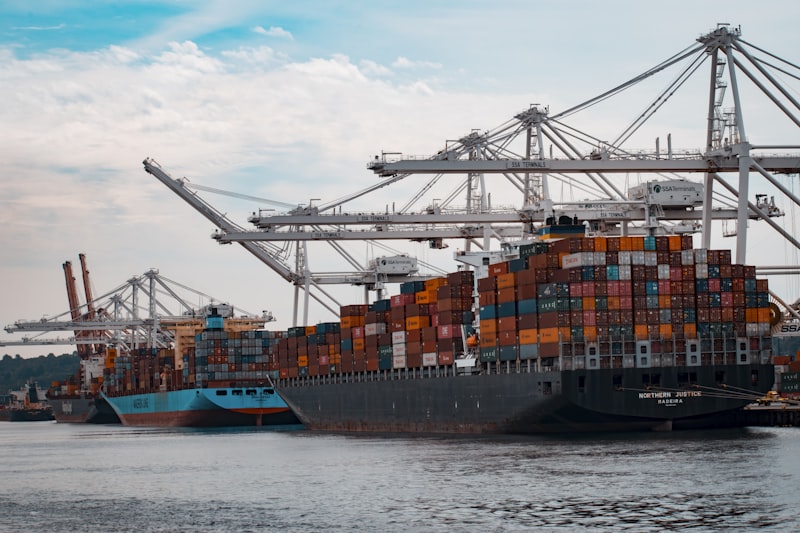
The last few years have exposed how fragile global supply chains can be. Pandemics, geopolitical tensions, climate events, and semiconductor shortages have forced enterprise leaders to rethink every assumption about sourcing, inventory, and last-mile delivery. In 2026, the most resilient supply chains share one common attribute: they are powered by artificial intelligence. AI supply chain resilience is no longer a theoretical advantage—it is an operational necessity for any organization that competes globally.
AI supply chain resilience is the application of machine learning, predictive analytics, and real-time data intelligence to identify, model, and mitigate supply chain disruptions before they impact operations. Unlike traditional risk management—which is largely reactive—AI-powered resilience enables organizations to anticipate disruptions weeks or months in advance and reconfigure supply networks dynamically in response to emerging threats.
According to McKinsey Global Institute, companies that invest in AI-powered supply chain management reduce operational costs by up to 19% and improve service levels by as much as 65%. For enterprise leaders evaluating where to direct their next AI investment, supply chain resilience consistently delivers among the highest returns on deployment. DigitalHubAssist works with enterprise clients across logistics, healthcare, finance, retail, and telecommunications to design these systems end to end.
Why AI Supply Chain Resilience Is Now a C-Suite Priority
Supply chain disruptions cost the global economy an estimated $4 trillion annually, according to a 2024 World Economic Forum report. For enterprises operating across multiple geographies, a single supplier failure can cascade into production stoppages, lost revenue, and reputational damage that takes years to repair. Traditional mitigation strategies—dual sourcing, buffer stock, manual audits—are no longer sufficient at the speed and scale that modern markets demand.
What changed in 2024–2026 is the accessibility of AI. Gartner's 2025 Supply Chain Technology Hype Cycle found that AI-driven supply chain risk intelligence moved from early-adopter territory into mainstream enterprise adoption, with 48% of large organizations reporting active AI deployments for disruption detection. The combination of large language models (LLMs), graph neural networks, and streaming IoT data has given supply chain teams a qualitatively new capability: the ability to reason over complex, multi-tier supplier networks in real time rather than relying on static risk registers and quarterly audits.
How AI Powers Supply Chain Resilience in 2026
AI contributes to supply chain resilience across five core capabilities. Each of these capabilities is available to enterprises working with specialist partners like DigitalHubAssist, which designs and deploys custom AI systems tailored to specific industry supply chains.
1. Multi-Tier Supplier Risk Monitoring
Most enterprises have visibility into their Tier 1 suppliers but operate blind beyond that. AI systems ingest structured data—financial filings, shipment records, production reports—alongside unstructured data such as news feeds, social media signals, and regulatory bulletins to model risk across Tier 2 and Tier 3 suppliers. When a rare-earth mineral supplier in a conflict zone shows signs of instability, the AI flags alternative sourcing options 30–60 days before the disruption reaches the factory floor. This early-warning advantage is the cornerstone of modern AI supply chain resilience.
2. Demand Signal Integration
AI integrates demand signals from point-of-sale systems, e-commerce platforms, macro-economic indicators, and weather data to dynamically adjust procurement and inventory positions. Forrester Research found that enterprises using AI-driven demand sensing reduced forecast error by 40–50% compared to traditional statistical models. For industries with short product lifecycles—consumer electronics, fast fashion, perishable goods—this accuracy difference is the margin between profit and loss.
3. Autonomous Inventory Rebalancing
Rather than waiting for planners to identify stockouts or excess inventory, AI systems continuously rebalance inventory across distribution nodes. Machine learning models account for lead times, carrier performance, customs delays, and seasonal patterns to recommend—or automatically execute—inventory transfers. This capability alone typically reduces carrying costs by 12–18%, according to Accenture's 2025 Supply Chain AI Benchmark.
4. Scenario Simulation and Stress Testing
AI enables supply chain teams to run digital twin simulations of their entire network. Before committing to a new supplier contract or a route change, planners can stress-test the network against historical disruption scenarios, climate events, or geopolitical shocks. DigitalHubAssist deploys this capability for clients in logistics, retail, and manufacturing, providing a continuous resilience score that executive teams can monitor alongside operational KPIs.
5. Carrier and Route Intelligence
AI analyzes real-time carrier performance data, port congestion reports, fuel price trends, and customs clearance times to recommend optimal shipping routes. When a primary lane degrades—due to port strikes, extreme weather, or regulatory changes—the AI surfaces alternative routes with estimated cost and time trade-offs, enabling procurement teams to act in hours rather than days.
AI Supply Chain Resilience Across Key Industry Verticals
Supply chain risk is not uniform. Each industry vertical faces a distinct combination of regulatory, geographic, and demand pressures. DigitalHubAssist's vertical-specific subsidiaries address these differences directly.
Healthcare: MedicalHubAssist
Medical supply chains operate under life-or-death stakes. A shortage of surgical supplies or IV contrast dye can cancel procedures and harm patients. MedicalHubAssist applies AI to monitor pharmaceutical ingredient sourcing, medical device inventory, and cold-chain logistics for biologics. Predictive models flag drug shortage risks 45–90 days in advance, giving hospital procurement teams time to secure alternative suppliers or adjust formulary choices before shortages reach clinical staff. Compliance with FDA traceability requirements is embedded into every data pipeline.
Logistics: LogisticHubAssist
For third-party logistics providers, resilience is the product. Customers pay for reliable delivery, and every missed window erodes the relationship. LogisticHubAssist deploys AI to optimize fleet routing, predict maintenance windows for vehicles and equipment, and provide real-time exception management. When a primary carrier reports delays, the system automatically identifies and books alternative carriers within service-level agreement thresholds—without requiring human intervention in the decision loop. The result is a measurable reduction in on-time delivery failures and a significant decrease in exception-handling labor costs.
Finance: FinanceHubAssist
Financial institutions and fintech companies have supply chains too—specifically, the supply chains of data, compliance documentation, and third-party service providers. FinanceHubAssist monitors vendor risk across technology providers, cloud infrastructure partners, and regulatory data feeds. AI models detect signals of vendor financial distress, data quality degradation, or regulatory sanctions—allowing financial operations teams to trigger contingency plans before service interruptions occur. This capability is especially critical for firms operating under Basel IV and DORA frameworks, where third-party risk management is a regulatory obligation.
Building an AI Supply Chain Resilience Strategy: A Phased Approach
Enterprises that attempt to deploy AI across their entire supply chain simultaneously typically fail. The most successful implementations follow a phased approach that builds capability incrementally while delivering measurable business value at each stage.
Phase 1 — Data Foundation (Weeks 1–8): Audit existing data sources—ERP, TMS, WMS, supplier portals—and establish unified data pipelines. AI cannot deliver resilience insights without clean, connected data. DigitalHubAssist begins every engagement here, assessing data readiness before recommending any AI tooling. The output is a data architecture blueprint that supports all subsequent AI capabilities.
Phase 2 — Risk Intelligence Layer (Weeks 9–20): Deploy AI monitoring for Tier 1 and Tier 2 supplier risk, demand sensing, and carrier performance tracking. This phase typically generates the first quantifiable ROI in the form of disruptions identified early and avoided altogether. Most clients see positive ROI within this phase alone.
Phase 3 — Autonomous Optimization (Weeks 21–36): Activate autonomous inventory rebalancing, route optimization, and scenario simulation. At this phase, the supply chain transitions from reactive to proactive—and eventually to self-optimizing. Human planners shift their focus from firefighting to strategic capacity decisions.
Enterprises that follow this phased model consistently report full ROI within 18 months, with ongoing compounding returns as AI systems ingest more operational data over time. To explore how DigitalHubAssist approaches broader AI implementation strategy, the DigitalHubAssist blog provides a comprehensive view of enterprise AI methodology across all major verticals.
Frequently Asked Questions: AI for Supply Chain Resilience
What types of supply chain disruptions can AI predict?
AI systems can identify a wide spectrum of supply chain disruptions, including supplier financial distress, port congestion, geopolitical events affecting trade lanes, extreme weather events, demand spikes and drops, carrier failures, and regulatory changes. The accuracy of predictions improves continuously as the AI ingests more historical and real-time data from connected operational sources.
How long does it take to implement AI supply chain resilience capabilities?
A phased implementation with a specialist partner typically takes 9–18 months from initial data assessment to full autonomous optimization. The first measurable outcomes—such as improved supplier risk visibility and demand forecast accuracy—are typically available within 90 days of project start, provided that the underlying data infrastructure is in reasonable condition.
Is AI supply chain resilience only for large enterprises?
While the largest deployments serve Fortune 500 companies, mid-market enterprises with $50M–$500M in revenue are increasingly adopting modular AI supply chain tools that require less infrastructure investment. Cloud-native AI platforms have dramatically reduced the barrier to entry. DigitalHubAssist designs right-sized implementations for mid-market clients that deliver enterprise-grade resilience without enterprise-level complexity or cost.
What is the ROI of AI supply chain resilience investments?
According to McKinsey, AI supply chain investments generate an average of $1.30 to $2.00 in value for every $1.00 invested, with payback periods typically ranging from 12 to 24 months. Primary value drivers include avoided disruption costs, reduced inventory carrying costs, lower logistics spend, and improved customer satisfaction scores that protect long-term revenue.
How does AI supply chain resilience differ from traditional supply chain risk management?
Traditional supply chain risk management relies on periodic audits, static risk registers, and manual reporting cycles that operate on weekly or monthly cadences. AI supply chain resilience operates continuously, ingests hundreds of data signals simultaneously, and generates recommendations in minutes. The practical difference is that traditional methods identify risk after disruptions begin, while AI identifies risk before disruptions materialize—giving enterprises the time to act rather than react.
Conclusion
AI supply chain resilience represents a structural shift in how enterprises compete. Organizations that build AI-powered resilience capabilities now are not just protecting against the next disruption—they are creating a durable competitive advantage that compounds over time as their AI systems learn from every event, every decision, and every data point flowing through the supply network.
DigitalHubAssist works with enterprise clients across logistics, healthcare, finance, retail, and telecommunications to design and deploy AI supply chain systems that deliver measurable resilience outcomes. For more on how AI is transforming enterprise operations across every major function, explore the DigitalHubAssist blog.