AI in Agriculture: How Machine Learning Is Transforming Farming and Food Supply Chains in 2026
From precision crop monitoring to AI-driven food supply chain optimization, machine learning is delivering measurable ROI for agricultural businesses in 2026. Discover the key applications, ROI data, and implementation roadmap.
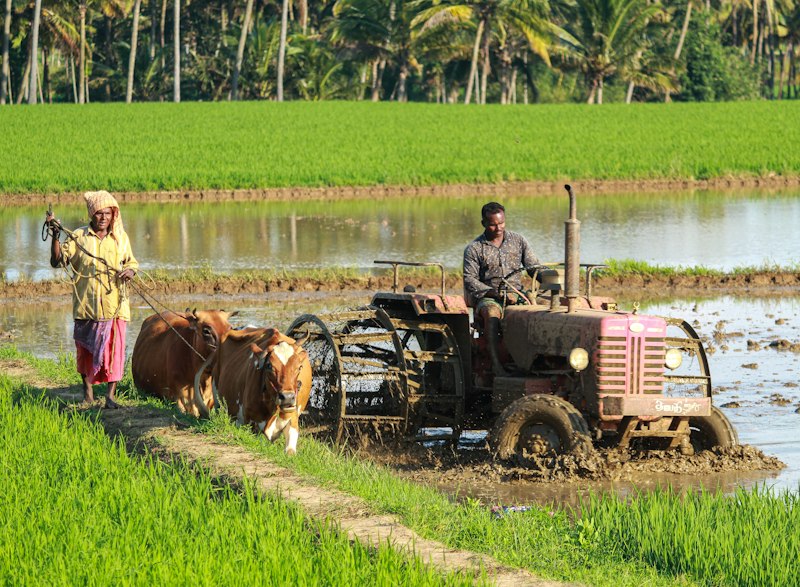
AI in agriculture is no longer a futuristic concept — it is a measurable, deployable reality reshaping how food is grown, monitored, and delivered. From intelligent irrigation systems to computer-vision-powered pest detection, machine learning is giving agricultural operators tools that translate directly into higher yields, lower input costs, and more resilient supply chains. For businesses across the agrifood value chain, 2026 marks an inflection point: early adopters are already reporting double-digit gains in operational efficiency, while laggards face rising competitive pressure from AI-native peers.
Definition: AI in agriculture refers to the application of machine learning, computer vision, predictive analytics, and autonomous systems to farming operations and food supply chains — enabling data-driven decisions about planting, growing, harvesting, logistics, and retail distribution of agricultural products.
According to McKinsey & Company, AI and advanced analytics could unlock up to $500 billion in additional value for the global agriculture sector by 2030, with the largest gains concentrated in precision farming, supply chain visibility, and demand forecasting for perishable goods. DigitalHubAssist works with agrifood operators, food distributors, and agricultural enterprises across North America to design and deploy AI solutions tailored to the unique challenges of this industry.
Why Agriculture Is an AI Priority in 2026
Three converging forces make AI adoption in agriculture an economic imperative rather than an optional upgrade. First, climate volatility is making traditional planting calendars and rule-of-thumb irrigation schedules unreliable. Second, global food demand is forecast to increase by 50 percent by 2050, while arable land per capita continues to shrink. Third, tightening margins in commodity markets are compressing the tolerance for inefficiency at every link of the supply chain.
Gartner's 2025 Hype Cycle for Emerging Technologies identified precision agriculture AI as moving firmly into the "Slope of Enlightenment" — the stage where technology delivers consistent, measurable results in production environments. Adoption rates among large agricultural enterprises (revenues above $50M) in North America crossed 38 percent in 2025, up from 21 percent in 2023, according to Forrester Research. The gap between adopters and non-adopters is widening: AI-enabled farms report yield improvements of 10–25 percent and input cost reductions of 12–18 percent compared to conventional operations.
For businesses connected to the agricultural value chain — including food processors, distributors, and grocery retailers partnering with solutions like LogisticsHubAssist for supply chain intelligence — this transformation creates both urgency and opportunity. Enterprises that invest in AI capabilities now establish proprietary data advantages that competitors cannot easily replicate.
Key Applications of Machine Learning in Modern Farming
Crop monitoring and yield prediction. Satellite imagery combined with ground-based IoT sensors feeds machine learning models that continuously assess crop health at the field level. These systems flag stress indicators — water deficit, nutrient imbalance, early-stage disease — days or weeks before they become visible to the human eye. Predictive yield models trained on multi-year historical data, weather patterns, and real-time field conditions forecast harvest volumes with accuracy rates exceeding 90 percent, allowing operators to make forward contracting decisions with confidence.
Precision pest and disease detection. Computer vision systems mounted on drones or autonomous ground vehicles identify pest infestations and fungal infections at the plant level, generating variable-rate spray maps that direct pesticide application only where needed. Field trials published by Accenture Research show that precision application reduces chemical inputs by 20–35 percent while maintaining or improving crop protection efficacy — a direct improvement to both margin and environmental footprint.
Autonomous equipment and robotic harvesting. AI-guided tractors using GPS, LiDAR, and real-time obstacle detection now operate with minimal human supervision across row crops and orchards. Robotic picking systems, trained on millions of labeled fruit and vegetable images, achieve harvest precision comparable to skilled manual labor while operating continuously, eliminating the labor shortages that have historically threatened crop value during peak harvest windows.
Water and resource optimization. Predictive irrigation systems integrate soil moisture sensors, evapotranspiration models, and hyper-local weather forecasts to schedule irrigation with surgical precision. McKinsey research indicates that AI-optimized irrigation can reduce water consumption by 25–40 percent compared to schedule-based systems — a critical advantage in regions facing water scarcity regulations or drought conditions.
AI for Agrifood Supply Chains: From Farm to Shelf
The benefits of AI in agriculture extend far beyond the farm gate. The agrifood supply chain — spanning post-harvest handling, cold chain logistics, processing, distribution, and retail — is one of the most data-rich and yet historically under-optimized systems in global commerce. AI changes that equation fundamentally.
Demand forecasting for perishables. Fresh produce, dairy, and meat present the hardest demand forecasting challenge in retail: products with narrow shelf lives, high price volatility, and demand patterns driven by weather, promotions, and local events. Machine learning models trained on point-of-sale data, social signals, weather forecasts, and promotional calendars reduce forecast error rates by 20–35 percent compared to statistical baselines, according to HubSpot's 2025 State of AI in Retail report. RetailHubAssist clients deploy these models to reduce perishable shrinkage — often the single largest controllable cost in food retail operations.
Cold chain visibility and quality assurance. IoT-connected temperature loggers, combined with machine learning anomaly detection, flag cold chain deviations in real time — enabling intervention before product quality is compromised. AI models can also predict remaining shelf life based on cumulative temperature exposure history, allowing dynamic routing decisions: product with compressed shelf life can be re-routed to high-velocity outlets rather than standard distribution channels.
Traceability and regulatory compliance. Food safety regulations in the United States, European Union, and major export markets increasingly require granular traceability from field to consumer. AI-powered traceability platforms extract, standardize, and link data from farm management systems, processing facilities, and logistics providers into a unified chain of custody — reducing the time required to execute a targeted food recall from days to hours.
LogisticsHubAssist supports agrifood distributors with AI-powered route optimization, load consolidation, and carrier performance analytics that reduce transportation costs by 8–15 percent while improving on-time delivery rates. When supply chain intelligence is unified with farm-level yield data, distributors gain the ability to anticipate supply gaps and activate contingency sourcing before shortfalls hit retail shelves.
The ROI of AI in Agriculture: What the Data Shows
Across documented deployments, AI in agriculture delivers returns that justify investment within 12–24 months for most use cases. Forrester's Total Economic Impact framework applied to precision agriculture platforms found an average three-year ROI of 187 percent, with payback periods of 14 months for crop monitoring and yield prediction systems. The largest value drivers are yield improvement (averaging 15 percent uplift), input cost reduction (averaging 14 percent savings on fertilizer and pesticides), and labor efficiency gains from autonomous equipment.
For supply chain and food retail applications, the ROI case is equally compelling. AI-driven demand forecasting typically reduces perishable shrinkage by 18–30 percent. Cold chain AI reduces product loss from temperature deviations by up to 40 percent. Traceability automation cuts compliance documentation costs by 30–50 percent. For enterprises operating at scale — food distributors, regional grocery chains, large food processors — these percentages translate to seven- and eight-figure annual savings.
How DigitalHubAssist Helps Agrifood Businesses Deploy AI
DigitalHubAssist designs and implements AI solutions for agrifood operators that span the full value chain — from precision farming analytics to supply chain intelligence and retail demand forecasting. The firm's approach begins with a focused AI readiness assessment that maps existing data assets, identifies the highest-value AI applications for the specific business context, and defines a phased implementation roadmap with clear ROI milestones.
For agricultural producers, DigitalHubAssist integrates AI crop monitoring platforms with existing farm management software, building predictive models calibrated to local soil types, crop varieties, and regional climate patterns. For supply chain and logistics operators, the team deploys demand forecasting engines, cold chain monitoring systems, and traceability platforms that connect seamlessly with existing ERP and warehouse management infrastructure. Explore the broader library of AI implementation guides and industry case studies at the DigitalHubAssist blog.
Frequently Asked Questions About AI in Agriculture
What types of farms benefit most from AI in agriculture?
AI in agriculture delivers the highest ROI for operations with sufficient data volume to train predictive models — typically farms of 500 acres or more for precision farming applications, and food businesses processing or distributing at least $10M in annual revenue for supply chain AI. However, DigitalHubAssist also designs AI-readiness pathways for smaller agricultural businesses, including cooperative models where multiple operators pool data to achieve the scale required for accurate machine learning.
How long does it take to implement an AI system in an agricultural operation?
Implementation timelines vary by application. Crop monitoring and yield forecasting systems can be operational in 60–90 days, once sensor infrastructure is in place. Demand forecasting for food retail requires 90–120 days to integrate point-of-sale data, train models, and validate accuracy against held-out historical periods. Full supply chain traceability platforms are typically deployed over 6–12 months, depending on the number of supply chain tiers and data sources involved.
Does AI in agriculture require replacing existing farm management software?
In most cases, AI systems are designed to integrate with — not replace — existing farm management software, ERP systems, and logistics platforms. DigitalHubAssist builds API-based integrations that surface AI insights within the interfaces operators already use, minimizing change management burden and accelerating adoption across farm staff and supply chain teams.
What data is required to start using AI for crop yield prediction?
A minimum viable dataset for crop yield prediction typically includes two to three years of historical yield records by field or zone, weather station data for the growing region, soil test results, and planting and application records. Satellite imagery and IoT sensor data enhance model accuracy but are not strictly required to begin. DigitalHubAssist conducts a data audit in the first phase of every engagement to identify gaps and design data collection strategies that fill them efficiently.
How does AI in agriculture address food safety and compliance requirements?
AI-powered traceability systems automatically capture, link, and audit-trail all movements of product from field to point of sale, creating the documentation required for FDA Food Safety Modernization Act (FSMA) compliance, USDA organic certification, and retailer traceability mandates. In a recall scenario, AI traceability platforms can identify affected product lots and downstream distribution points in minutes rather than the days or weeks typically required with manual documentation systems.