AI for Construction and Engineering: How the Building Industry Uses Computer Vision, Predictive Analytics, and Digital Twins to Cut Costs in 2026
Construction firms deploying AI report 15% lower project costs and 25% fewer safety incidents. Here is how leading engineering and building companies use computer vision, predictive analytics, and digital twins to stay competitive in 2026.
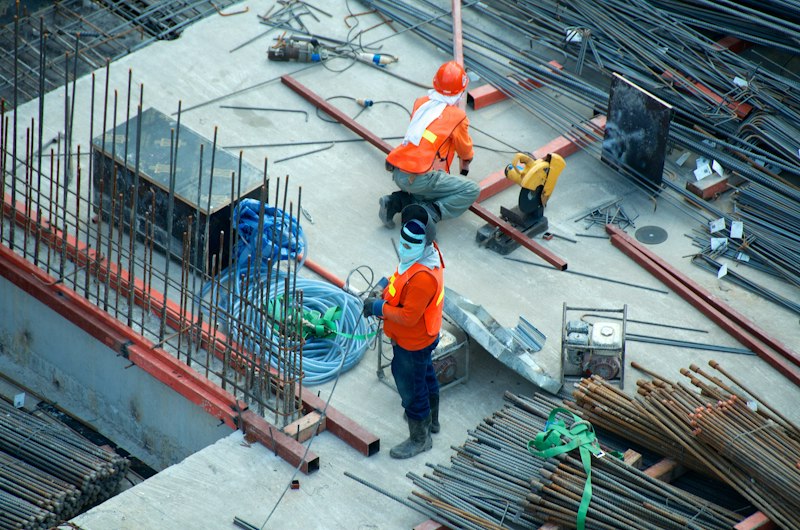
The construction industry has long resisted digital transformation, but AI for construction is now delivering measurable results that even the most skeptical project managers cannot ignore. From automated safety monitoring on job sites to AI-powered cost estimation and digital twin simulations, engineering and building firms that adopt intelligent automation are outcompeting slower rivals on every dimension — cost, safety, speed, and quality. DigitalHubAssist helps construction and engineering companies evaluate, deploy, and scale AI across their operations so that technology investments translate directly into project margins.
AI for construction refers to the application of machine learning, computer vision, predictive analytics, and generative AI to construction project management, safety monitoring, design optimization, cost estimation, and supply chain coordination. These systems analyze data from sensors, cameras, drones, BIM models, and historical project records to surface actionable insights that reduce risk, cut waste, and accelerate project delivery.
According to McKinsey Global Institute, the construction industry operates at roughly 80% of its potential productivity — one of the lowest rates of any major sector. AI is the lever that can finally close this gap. Early adopters report 10–15% reductions in project costs, 20–30% faster completion timelines, and safety incident rates that drop by a quarter or more when AI-powered monitoring is deployed on job sites.
How AI for Construction Transforms Job Site Safety
Safety is the most urgent priority on any construction site, and it is also where AI delivers some of its fastest, most visible returns. Computer vision systems mounted on existing site cameras can detect personal protective equipment (PPE) compliance in real time — flagging workers who are missing hard hats, high-visibility vests, or safety harnesses before an incident occurs. These systems operate 24 hours a day, seven days a week, without fatigue-related lapses in attention that affect even the most diligent human supervisors.
Accenture research found that construction firms using AI-powered safety monitoring reduced recordable incident rates by up to 28% within the first year of deployment. Drone-based inspection fleets, guided by AI image recognition, survey large sites daily and identify structural anomalies, unauthorized access, and hazardous material storage violations that human inspectors would likely miss between scheduled walk-throughs.
DigitalHubAssist works with engineering firms to integrate computer vision safety systems with existing surveillance infrastructure, minimizing upfront hardware investment while delivering real-time safety alerts to site managers and project directors. For clients in the logistics sector, similar approaches are applied by LogisticHubAssist to monitor warehouse environments where heavy equipment and pedestrian traffic create comparable safety challenges. Explore related insights at the DigitalHubAssist blog.
AI-Powered Cost Estimation and Project Planning
Cost overruns are endemic to construction — the industry averages budget overruns of 16% on large-scale projects, according to research from Oxford University's Saïd Business School. AI-driven cost estimation models trained on thousands of historical project records predict cost variances with far greater accuracy than traditional quantity surveying methods, often reducing estimation error by 20–35%.
Predictive analytics platforms analyze variables including material price trends, labor availability by region, subcontractor performance history, and weather pattern data to produce probabilistic cost and schedule forecasts. Rather than a single point estimate, project owners receive a risk-adjusted range with confidence intervals — giving finance teams and lenders a much clearer picture of project exposure before a single shovel breaks ground.
Gartner forecasts that by 2027, 60% of major infrastructure projects will incorporate AI-powered scenario modeling during the pre-construction phase. DigitalHubAssist helps construction clients select and configure these platforms, connecting them to existing ERP systems and project management tools so that AI insights feed directly into budget management and procurement workflows — the same integration approach used in the AI ERP Integration guide on the DigitalHubAssist blog.
Digital Twins: The Most Powerful AI Tool in Construction
A digital twin is a real-time virtual replica of a physical asset. In construction, this means a living 3D model of a building or infrastructure project that ingests sensor data, schedule updates, and supply chain information continuously. When AI is layered onto a digital twin, project teams gain the ability to simulate design changes, stress-test construction sequences, and identify coordination conflicts weeks or months before they manifest on site — when correction costs a fraction of what it would in the field.
A Forrester Consulting study found that construction firms using AI-enhanced digital twins reduced design clash resolution time by 43% and cut material waste by up to 17%. For complex projects such as hospitals, data centers, and logistics hubs, these savings compound across dozens of interdependent systems — MEP, structural, and architectural — that must be coordinated simultaneously under tight schedule pressure.
DigitalHubAssist helps clients integrate AI into existing BIM workflows, enabling digital twin deployments that do not require a full platform replacement. For healthcare construction clients, this approach aligns with what MedicalHubAssist applies when helping hospitals expand facilities while maintaining operational continuity and regulatory compliance throughout the construction period.
AI for Supply Chain and Materials Management
Materials procurement is one of the most complex and expensive aspects of any construction project. AI demand-forecasting models analyze project schedules, lead times, supplier performance records, and commodity price trends to recommend optimal procurement windows — helping project managers avoid both costly rush orders and expensive on-site storage of materials delivered too early. The result is a tighter, more predictable materials pipeline that directly improves cash flow and reduces waste.
A McKinsey report on construction productivity found that AI-optimized procurement reduced materials cost as a share of total project budget by an average of 6–9% across a sample of more than 200 global construction projects. For projects operating on tight margins, this improvement alone can determine whether a project finishes in the black.
LogisticHubAssist applies similar AI supply chain methodologies to just-in-time logistics networks. Construction firms that connect their procurement systems to LogisticHubAssist's demand-forecasting infrastructure gain access to shared commodity pricing data and supplier reliability scores that individual firms cannot cost-effectively develop on their own.
Predictive Maintenance for Construction Equipment
Heavy equipment — excavators, cranes, concrete pumps, and compactors — represents some of the most expensive capital deployed on any construction project. Unplanned equipment breakdowns cost the North American construction industry an estimated $4.6 billion annually, according to the Association of Equipment Manufacturers. AI predictive maintenance, powered by IoT sensors and machine learning models trained on equipment telematics data, identifies mechanical failure precursors days or weeks before a breakdown occurs, enabling repairs to be scheduled during planned downtime rather than mid-project.
Fleet operators using predictive maintenance report reducing unplanned downtime by 25–40%, extending equipment service life by 15–20%, and dramatically lowering emergency repair costs and project delay penalties. DigitalHubAssist helps construction equipment fleets integrate telematics data streams with AI predictive models, creating automated maintenance scheduling systems that prioritize repairs based on project criticality and parts availability.
Frequently Asked Questions: AI for Construction and Engineering
What is the best entry point for AI in a construction company?
For most construction firms, AI-powered safety monitoring and cost estimation deliver the fastest, most measurable returns. Both applications can be piloted on a single project with relatively low integration complexity. Safety monitoring requires connecting to existing site cameras; cost estimation requires access to historical project data. DigitalHubAssist recommends beginning with a three-month pilot on an active project before committing to a broader rollout across the portfolio.
How much does AI for construction cost to implement?
Implementation costs vary significantly based on scope and existing technology infrastructure. A computer vision safety monitoring pilot for a mid-sized job site typically ranges from $15,000 to $40,000. A full AI cost-estimation and digital twin integration for a large construction firm can range from $200,000 to $1 million or more, depending on the number of active projects, complexity of existing ERP and BIM systems, and required customization. ROI typically exceeds 3:1 within the first 24 months for firms that commit to organization-wide adoption.
Does AI replace estimators, project managers, or site supervisors in construction?
AI for construction augments human professionals rather than replacing them. Estimators using AI tools close bids faster and with greater accuracy. Project managers with AI-powered dashboards catch schedule risks earlier. Site supervisors with AI safety alerts spend less time on reactive incident response and more time on proactive site management. Firms that adopt an augmentation mindset — rather than a headcount-reduction mindset — consistently report stronger employee buy-in and better long-term outcomes from AI investment.
How does AI integrate with existing BIM and project management software?
Modern AI platforms for construction connect with leading BIM environments including Autodesk Revit, Bentley Systems, and Trimble via standard APIs. Most also integrate with project management platforms such as Procore, Oracle Primavera, and Microsoft Project. DigitalHubAssist's integration methodology maps data flows between existing tools and AI systems before any deployment begins, ensuring that project teams do not face disruptive software migrations while active projects are underway.
What data does a construction company need to start using AI?
The most valuable data for AI in construction includes historical project records (scope, cost, schedule, and outcomes), equipment telematics feeds, subcontractor and supplier performance logs, and site survey data from drones or laser scanning. For safety applications, access to existing camera infrastructure is the primary requirement. Most mid-to-large construction firms already possess sufficient historical data to begin training predictive models without waiting years for additional data collection. DigitalHubAssist conducts a data readiness assessment as the first step of every engagement to identify gaps and prioritize data collection efforts.
Building the Business Case for AI in Construction
Construction executives seeking capital allocation for AI investment build their strongest cases around three metrics that CFOs and project owners already track: cost variance, safety incident rate, and schedule adherence. AI systems with documented performance benchmarks — quantified reductions in incident rates, cost overruns, and schedule delays from comparable deployments — are far more persuasive than technology capability descriptions alone.
DigitalHubAssist helps construction clients build evidence-based business cases by benchmarking current performance, modeling AI-driven improvements using industry-validated data from McKinsey, Gartner, Accenture, and Forrester, and designing pilot programs with measurable success criteria. Clients across the FinanceHubAssist and RetailHubAssist verticals have used the same evidence-based ROI framework to secure capital allocation for AI projects in their respective industries. For construction and engineering firms ready to move from curiosity to deployment, DigitalHubAssist offers an AI Readiness Assessment that evaluates data maturity, technology infrastructure, and organizational change readiness before any technology commitment is made.