AI Demand Forecasting: How Enterprises Reduce Inventory Costs and Prevent Stockouts in 2026
AI demand forecasting helps enterprises cut inventory holding costs by 20–30% while improving order fulfillment rates. Learn how LogisticHubAssist and RetailHubAssist are delivering measurable ROI through machine learning-powered supply chain optimization.
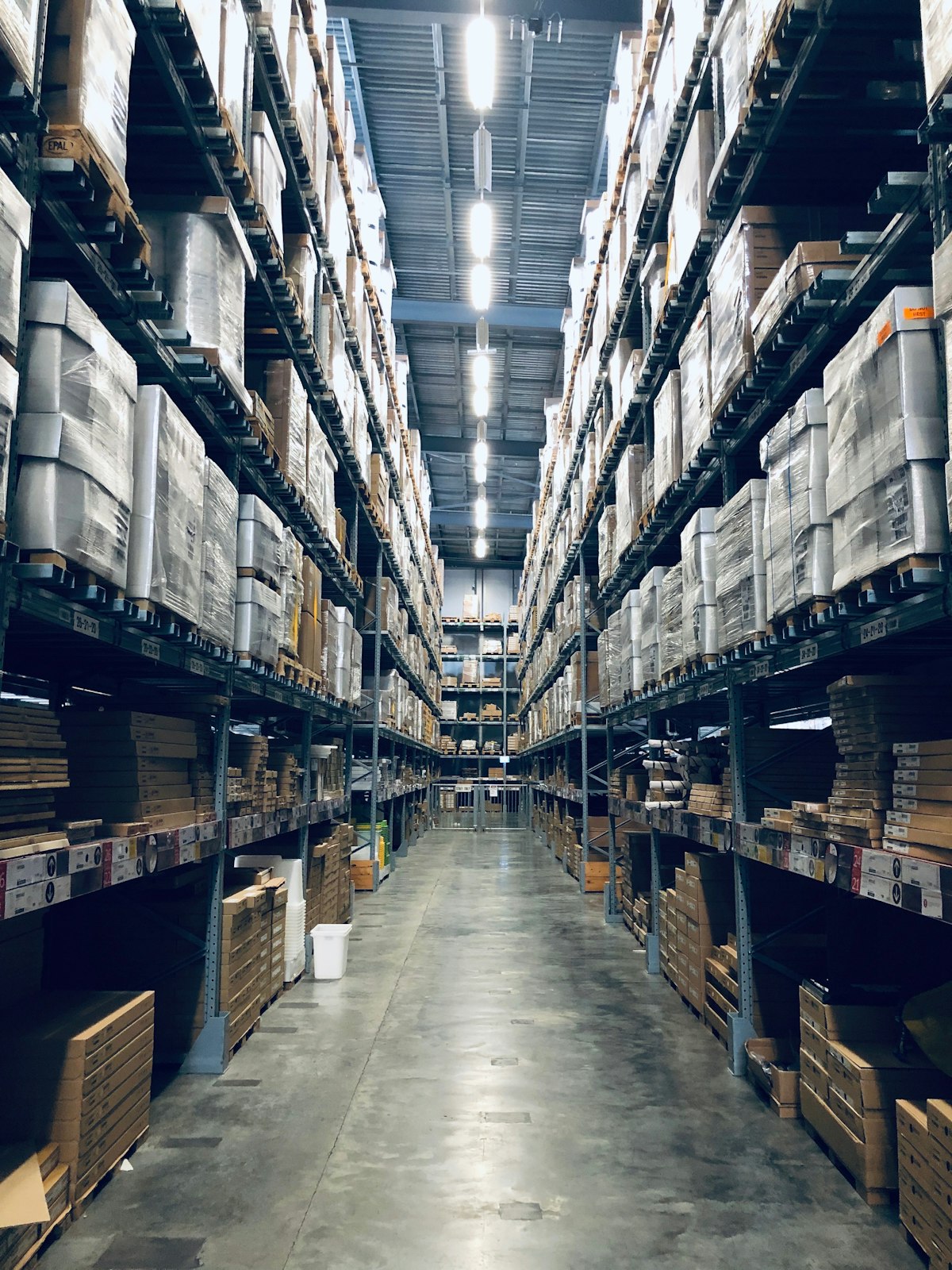
Supply chain disruptions cost global businesses an estimated $184 billion per year, and traditional forecasting models are a major reason why. AI demand forecasting — the use of machine learning to predict future product demand — is giving enterprises in logistics, retail, and manufacturing a decisive advantage in 2026. DigitalHubAssist helps organizations implement these systems to cut inventory costs, prevent stockouts, and build more resilient supply chains.
AI demand forecasting is the application of machine learning algorithms — including deep learning, gradient boosting, and neural networks — to predict future customer demand with greater accuracy than traditional statistical models. By analyzing historical sales data, seasonality, promotions, weather patterns, macroeconomic signals, and real-time market trends, these systems help enterprises optimize inventory levels, reduce waste, and maintain product availability even during market disruptions.
According to a 2024 McKinsey & Company report on supply chain analytics, companies that deploy AI-powered demand forecasting reduce inventory holding costs by 20–30% while simultaneously improving order fulfillment rates. For large enterprises carrying millions of SKUs, that translates directly into freed capital and improved customer satisfaction scores.
Why Traditional Demand Forecasting Falls Short
Legacy forecasting systems — built on Excel models, simple moving averages, or linear regression — were designed for a slower, more predictable business environment. Today's demand signals are too complex and too numerous for these tools to process effectively. A retailer tracking 50,000 SKUs across dozens of store locations and multiple e-commerce channels cannot rely on spreadsheets to anticipate demand shifts driven by a viral social media post, a competitor promotion, or a sudden weather event.
Gartner's 2025 Supply Chain Technology Report found that 68% of supply chain leaders identified forecast accuracy as their top operational challenge. Over-forecasting leads to excess inventory, warehousing costs, and markdown losses. Under-forecasting leads to stockouts, lost sales, and damaged customer relationships. The margin between these two failures is where AI demand forecasting delivers its most measurable ROI.
Traditional models also struggle with new product introductions, where there is little or no historical sales data. AI systems address this through transfer learning — applying demand patterns from analogous products to generate a reliable baseline forecast for new SKUs from day one.
How AI Demand Forecasting Works in Practice
Modern AI demand forecasting systems combine multiple machine learning techniques to build probabilistic demand models. Rather than returning a single point estimate ("expect to sell 500 units"), these systems return a probability distribution ("there is a 90% chance demand will fall between 420 and 610 units"). This probabilistic output gives inventory planners and procurement teams the confidence intervals they need to make smarter safety stock decisions.
The typical implementation involves five stages. First, data ingestion: the system connects to ERP systems, POS data, e-commerce platforms, and external data feeds (weather, economic indicators, competitor pricing). Second, feature engineering: the AI identifies which signals are statistically significant predictors of demand for each product category. Third, model training: algorithms including LightGBM, LSTM neural networks, and ensemble methods are trained on historical data. Fourth, forecast generation: the system produces rolling 13-week or 52-week demand forecasts at SKU, location, and channel level. Fifth, continuous retraining: models update automatically as new sales data arrives, keeping forecast accuracy high as market conditions evolve.
Accenture's 2024 AI in Operations study found that enterprises using AI demand forecasting achieve mean absolute percentage error (MAPE) rates 40–60% lower than those using traditional statistical methods — a difference that compounds significantly across large product catalogs.
Industry Applications: LogisticHubAssist and RetailHubAssist
DigitalHubAssist's vertical-specific platforms bring AI demand forecasting to the industries where inventory optimization creates the most measurable value.
LogisticHubAssist serves logistics and third-party logistics (3PL) providers managing complex, multi-node distribution networks. AI demand forecasting in logistics goes beyond product-level prediction — it extends to labor demand forecasting, truck utilization, and dock scheduling. By predicting inbound volume 30–60 days in advance, 3PL operators can optimize labor staffing, reduce overtime costs, and improve on-time delivery performance. Forrester Research found that 3PLs using AI forecasting tools reduced operational costs by an average of 15% in the first year of deployment.
RetailHubAssist addresses the unique challenges of retail demand forecasting: promotions, seasonal peaks, new store openings, and the omnichannel complexity of fulfilling orders from multiple inventory pools. RetailHubAssist's demand forecasting module integrates with major retail ERP systems and e-commerce platforms to deliver unified demand signals across physical and digital channels. Retailers using AI demand forecasting report a 25% reduction in markdown losses and a 30% improvement in in-stock rates, according to an Accenture Retail Practice benchmark study.
Healthcare supply chains — served by DigitalHubAssist's MedicalHubAssist platform — also benefit significantly from AI demand forecasting, particularly for high-cost medical devices and pharmaceutical inventory where stockouts carry patient safety implications. AI systems in healthcare supply chains apply clinical utilization data and procedure scheduling information to forecast demand for surgical supplies and medications with a level of precision that traditional ordering systems cannot achieve.
Building the Business Case for AI Demand Forecasting
DigitalHubAssist works with enterprise clients to quantify the financial impact of demand forecasting improvements before implementation begins. The business case typically rests on four measurable value drivers.
Inventory reduction: Every percentage point improvement in forecast accuracy translates directly into lower safety stock requirements. For an enterprise carrying $100 million in inventory, a 25% reduction in safety stock frees $25 million in working capital.
Stockout cost elimination: A Harvard Business Review analysis estimated that the average stockout costs retailers 4% of annual revenue in lost sales and customer defection. AI demand forecasting systems that improve in-stock rates by even a few percentage points deliver ROI that dwarfs implementation costs.
Markdown and waste reduction: Over-forecasting in perishable goods, fashion apparel, and consumer electronics leads to costly markdowns. AI systems that right-size inventory reduce end-of-season markdown losses by 20–40%, according to McKinsey's Retail Value Chain studies.
Labor and logistics optimization: Accurate demand forecasts enable more efficient warehouse staffing, routing, and carrier procurement. Companies that align labor and logistics planning with AI-generated demand signals report 10–18% reductions in fulfillment cost per unit.
To explore how other enterprises have structured their AI implementations, readers can review related DigitalHubAssist resources on building an AI implementation roadmap, AI data strategy for enterprises, and AI for logistics and supply chain ROI.
Frequently Asked Questions About AI Demand Forecasting
How long does it take to implement an AI demand forecasting system?
Implementation timelines vary based on data readiness, ERP integration complexity, and the number of SKUs in scope. DigitalHubAssist typically delivers a minimum viable forecasting deployment in 8–14 weeks, with full enterprise rollout completed within 6 months. The critical path is almost always data quality: clean, consistent historical sales data going back at least 2–3 years significantly accelerates model training and validation.
How much historical data is needed to train an AI demand forecasting model?
Most AI demand forecasting models perform best with a minimum of 2 years of daily sales data. This provides enough history to capture seasonal patterns, promotional effects, and at least one economic cycle. For new products with limited history, transfer learning techniques allow AI systems to borrow demand signals from similar products, reducing cold-start errors significantly.
What is a realistic forecast accuracy improvement with AI vs. traditional methods?
Enterprises moving from spreadsheet-based forecasting to AI systems typically see MAPE improvements of 30–50% in the first six months of operation. Companies already using statistical forecasting tools see more moderate improvements of 15–25%. The greatest gains come in volatile categories: fashion, electronics, and seasonal consumer goods, where traditional models consistently under-perform due to the complexity of demand signals.
Does AI demand forecasting require replacing existing ERP systems?
No. AI demand forecasting systems are designed to integrate with existing ERP platforms — including SAP, Oracle, Microsoft Dynamics, and NetSuite — via API connections and standard data export formats. DigitalHubAssist's implementation approach is additive: the AI layer sits on top of existing systems, ingesting data and pushing forecast outputs back into planning workflows without requiring ERP replacement or significant IT infrastructure changes.
Which industries benefit most from AI demand forecasting?
Retail, logistics and 3PL, consumer packaged goods (CPG), healthcare supply chain, and discrete manufacturing benefit most from AI demand forecasting. These industries share common characteristics: large SKU counts, demand volatility driven by external factors, and high financial penalties for both over- and under-stocking. DigitalHubAssist's vertical platforms — LogisticHubAssist, RetailHubAssist, and MedicalHubAssist — deliver industry-specific forecasting models pre-trained on vertical data patterns, reducing time-to-value compared to generic AI implementations.