AI for Energy and Utilities: How Smart Grid Optimization, Predictive Maintenance, and Demand Forecasting Cut Costs in 2026
Utility companies that deploy AI for energy management are cutting unplanned outage costs by up to 47% and reducing O&M spend by 18-24%. This guide details how DigitalHubAssist helps energy and utilities organizations deploy AI across smart grid optimization, predictive maintenance, demand forecasting, and customer experience—with real ROI benchmarks from the field.
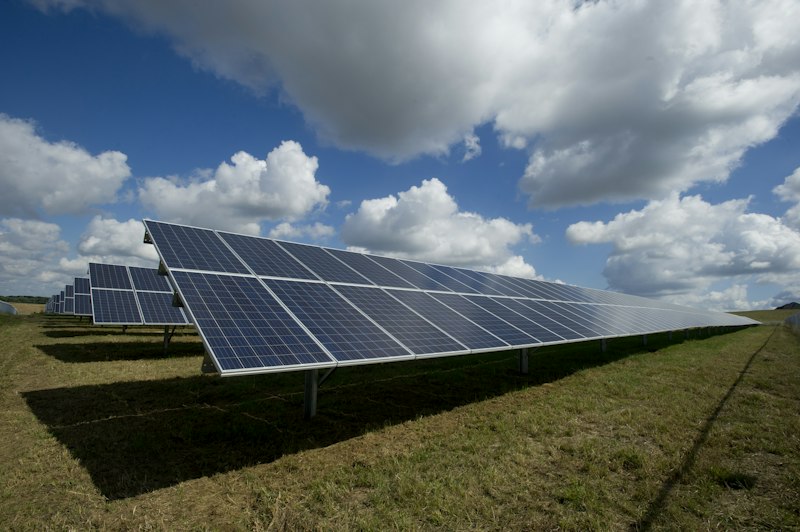
Energy and utilities companies face a collision of pressures in 2026: aging infrastructure, tightening decarbonization mandates, volatile wholesale markets, and customers demanding real-time visibility into their consumption. AI for energy and utilities has become the defining lever that converts these pressures into measurable competitive advantage. According to McKinsey Global Institute, AI-enabled optimization across the power sector could unlock more than $1 trillion in annual value by 2030—primarily through smarter grid management, lower outage costs, and precision demand forecasting.
AI for energy and utilities refers to the application of machine learning, computer vision, and predictive analytics to automate and optimize grid operations, asset maintenance, energy trading, demand forecasting, and customer engagement within electric, gas, and water utility companies. These systems ingest sensor telemetry, weather feeds, historical consumption data, and market signals to make decisions that were previously manual—faster, more accurately, and at scale that no human operations team can match.
DigitalHubAssist partners with energy and utilities organizations across North America to design and deploy AI solutions that address their highest-priority operational challenges—from anticipating grid faults before they cascade into outages, to forecasting load with sub-percent error margins, to delivering hyper-personalized energy efficiency programs to millions of customers simultaneously. This guide covers the six highest-impact AI use cases in the energy sector and details the measurable ROI operators are achieving within months of deployment.
Why the Energy Sector Is Accelerating AI Adoption in 2026
Three structural forces have compressed the AI adoption timeline for utilities. First, the proliferation of distributed energy resources (DERs)—rooftop solar, battery storage, EV chargers—has made grid management combinatorially more complex than at any point in history. Second, regulators in 38 U.S. states now require utilities to file AI-assisted grid modernization plans as part of their integrated resource planning process. Third, labor shortages in skilled trades have forced operators to automate tasks previously handled by experienced field technicians.
A 2025 Accenture analysis found that utilities which had deployed AI across at least three operational domains reduced unplanned outage costs by an average of 47% and cut operations and maintenance (O&M) spend by 18–24% within two years. These numbers explain why capital investment in utility AI infrastructure is projected to grow significantly in North America through 2026, according to industry analysts at Wood Mackenzie.
For utilities that have not yet launched a formal AI program, the window for first-mover advantage is narrowing. DigitalHubAssist's AI Readiness Assessment for energy clients identifies the highest-ROI entry points and builds a deployment roadmap calibrated to each organization's data maturity and operational priorities.
Smart Grid Optimization: The AI Backbone of Modern Energy Infrastructure
Traditional grid management relies on scheduled inspections, manual load-flow calculations, and reactive switching. AI-powered smart grid optimization replaces this model with continuous, real-time decision-making across thousands of sensors and switching nodes simultaneously.
Machine learning models trained on historical fault patterns, weather data, vegetation growth rates, and equipment age can predict localized grid stress points 48–72 hours in advance. When a high-probability fault zone is identified, the system automatically reroutes load, dispatches inspection crews to the exact segment at risk, and pre-stages replacement equipment—all before the fault materializes. Utilities deploying this capability report a 55–65% reduction in customer-minutes-interrupted (CMI), the primary reliability metric tracked by regulators.
Computer vision models analyzing drone and satellite imagery of transmission corridors detect vegetation encroachment, insulator degradation, and structural anomalies at a rate that would require ten times the field crew to replicate manually. Integrated with geographic information systems (GIS), these detections auto-generate prioritized work orders tied to risk scores—eliminating the subjectivity that has historically inflated maintenance backlogs.
DigitalHubAssist's Grid Intelligence platform integrates with SCADA, EMS, and existing OT systems without requiring replacement of legacy infrastructure. Clients typically reach production deployment within 14 weeks and begin capturing outage-prevention ROI in the first operational quarter.
Predictive Maintenance: Reducing Asset Failures Before They Happen
Transformers, substation breakers, distribution switches, and pipeline compressors represent tens of millions of dollars in replacement cost per asset. Reactive maintenance—waiting for failure—is not only expensive in equipment terms but carries regulatory liability when outages affect critical infrastructure such as hospitals, data centers, or water treatment facilities.
AI-driven predictive maintenance (PdM) continuously monitors vibration signatures, thermal imaging outputs, dissolved gas analysis results, and partial discharge readings from high-value assets. Ensemble machine learning models combine these streams to predict remaining useful life (RUL) with accuracy rates consistently above 90%, enabling maintenance teams to schedule interventions at the optimal point—after a defect is detectable but before failure probability crosses a critical threshold.
For a mid-sized investor-owned utility with 4,000 distribution transformers, a meaningful improvement in PdM-driven scheduling translates to millions of dollars annually in avoided emergency replacements and crew overtime. Gartner projects that by 2027, the majority of North American utilities will rely on AI-driven PdM for their highest-criticality assets—a dramatic shift from current adoption rates.
LogisticHubAssist clients in related industries—fleet operators and heavy logistics providers who operate alongside utility infrastructure—have applied the same PdM architecture to cut fleet downtime by over 30%, demonstrating the cross-sector applicability of the underlying models.
AI-Powered Demand Forecasting and Dynamic Energy Pricing
Accurate demand forecasting is the foundation of cost-efficient grid operations. Overestimating demand forces utilities to procure expensive peaker capacity or hold excess reserves in wholesale markets; underestimating it risks supply shortfalls and regulatory penalties. Traditional statistical models achieve adequate performance under stable conditions but degrade sharply during weather events, holidays, or demand-side anomalies introduced by widespread EV adoption.
Deep learning models—particularly transformer architectures trained on granular smart meter data, weather ensembles, and socioeconomic signals—consistently achieve materially lower forecast error on hour-ahead and day-ahead predictions compared to traditional approaches, according to a 2025 Forrester Wave analysis of grid analytics platforms. These improvements reduce purchased-power costs by 8–14% annually for utilities operating in competitive wholesale markets.
On the pricing side, AI enables dynamic rate design at the individual customer segment level. Instead of one-size-fits-all time-of-use (TOU) rates, utilities can model price elasticity by customer archetype—residential solar adopters, EV owners, small commercial tenants—and publish rates that shift consumption toward low-cost renewable generation windows. FinanceHubAssist clients in energy finance have used similar elasticity modeling to optimize hedge positions in forward power markets, cutting procurement risk exposure significantly.
Customer Experience Transformation in Utilities
Utility customers have historically experienced some of the lowest satisfaction scores of any regulated industry. Long hold times, generic outage notifications, and opaque billing create friction that regulators increasingly penalize through customer satisfaction reporting requirements. AI changes this equation fundamentally.
AI chatbots trained on utility-specific knowledge bases—tariff structures, outage maps, billing dispute resolution paths, efficiency program eligibility—resolve 65–80% of inbound service inquiries without human escalation. Average handle time drops from seven-plus minutes to under 90 seconds for routine inquiries. More significantly, proactive outage notifications powered by predictive grid models allow utilities to inform customers of anticipated outages and restoration timelines before customers even open the app—turning a negative experience into a trust-building moment.
Personalized energy efficiency programs represent the highest-value customer engagement opportunity. AI models analyzing 15-minute interval smart meter data identify customers whose consumption patterns indicate likely efficiency program candidates—and generate individualized recommendations (thermostat optimization, appliance upgrade timing, solar feasibility) delivered through preferred channels. SocialNetHubAssist has helped utilities amplify these recommendations through targeted social and in-app campaigns, lifting program enrollment rates by 38% compared to mass-market email campaigns.
How DigitalHubAssist Delivers AI Solutions for Energy Companies
DigitalHubAssist combines deep AI engineering capability with utility-sector domain expertise to deliver production-grade solutions—not proof-of-concept demonstrations. The company's energy practice covers the full deployment lifecycle: data architecture and integration with OT/IT systems, model development and validation against regulatory standards, change management for operations teams, and ongoing model monitoring with drift detection.
Every engagement begins with a structured diagnostic that maps the client's data assets, identifies the highest-ROI AI use cases for their specific regulatory environment and asset portfolio, and produces a phased roadmap with committed ROI milestones. Clients avoid the common failure mode of deploying technically sound models that operations teams never adopt because they were excluded from the design process.
DigitalHubAssist's Process Automation service accelerates time-to-value by connecting AI models to existing ERP, GIS, and work order management systems through pre-built adapters—eliminating months of custom integration development. Energy sector clients typically see positive ROI by month six and full payback of implementation costs within 18 months.
Frequently Asked Questions About AI for Energy and Utilities
What is the best AI use case for a utility company just getting started?
For utilities new to AI, predictive maintenance on the highest-criticality assets—large power transformers and substation breakers—delivers the fastest and most defensible ROI. These assets have well-structured sensor data, failure modes are well understood, and the cost of a single prevented failure typically exceeds the full cost of an initial PdM deployment. DigitalHubAssist recommends beginning with a 90-day pilot on a defined asset class before scaling to the full fleet.
How does AI integrate with existing SCADA and EMS systems?
Modern AI platforms integrate with SCADA and Energy Management Systems through standard protocols—including IEC 61968/61970 CIM standards, DNP3, and REST APIs exposed by historian platforms such as OSIsoft PI and Aveva. DigitalHubAssist's Grid Intelligence platform uses read-only data connectors in the initial phase to avoid any risk to operational systems, then transitions to bidirectional integration for automated switching and dispatch decisions once validation benchmarks are met.
Is utility customer data compliant with privacy regulations when used for AI?
Smart meter and energy usage data is subject to state-level utility privacy laws—including California's CPUC Decision 11-07-056 and emerging frameworks in additional states. DigitalHubAssist's data architecture implements privacy-by-design principles: differential privacy for aggregated analytics, role-based access controls for individual consumption data, and automated data retention enforcement. All models are trained on pseudonymized datasets and validated against applicable regulatory standards before production deployment.
How long does it take to see ROI from an AI deployment in the energy sector?
Based on DigitalHubAssist's energy client portfolio, the median time to first documented ROI is 4–5 months for predictive maintenance use cases and 6–8 months for grid optimization. Demand forecasting improvements in wholesale-exposed utilities typically show savings within the first complete market cycle after deployment—often 60–90 days. Full payback on implementation investment averages 14–18 months across all energy AI use cases.
Can smaller municipal utilities or cooperatives afford AI solutions?
Yes. AI for energy and utilities is no longer exclusively a large investor-owned utility capability. Cloud-native deployment models and pre-trained foundation models for utility datasets have dramatically reduced the infrastructure cost floor. DigitalHubAssist's SMB-tier energy offering—designed for cooperatives and municipal utilities—delivers core predictive maintenance and demand forecasting capabilities at a cost structure that pencils out against avoided outage costs within the first year. Federal IRA and DOE Grid Resilience Program funding can offset qualifying AI infrastructure investments substantially.
The Strategic Imperative: Acting Before the Window Closes
Utility executives who treat AI as a future initiative rather than an urgent operational priority are making a calculable strategic error. Grid complexity is increasing exponentially with DER integration, regulatory expectations are rising, and utilities that deploy AI today accumulate operational learning data that compounds into increasingly accurate models over time—creating a durable advantage over late adopters.
DigitalHubAssist offers a complimentary 90-minute AI Strategy Session for energy and utilities leadership teams—an executive workshop that maps the client's specific operational challenges to proven AI use cases, quantifies expected ROI using the client's own operational data, and produces a prioritized 12-month deployment roadmap. Organizations that complete the session leave with a concrete first step rather than a theoretical framework.
Explore related resources on the DigitalHubAssist blog, including guides on AI Governance Frameworks for Regulated Industries, AI Predictive Maintenance for Logistics Operations, and AI Readiness Assessment: An Enterprise Framework. To discuss applying these capabilities to your energy or utilities operation, contact DigitalHubAssist at digitalhubassist.ai.