AI for Warehouse Management: How Machine Learning Drives Faster Fulfillment and Smarter Operations in 2026
Machine learning transforms warehouse operations—cutting fulfillment time by up to 60%, reducing mis-picks, and dynamically reallocating labor. DigitalHubAssist's LogisticHubAssist platform helps enterprise distribution centers deploy AI warehouse management at scale without disrupting existing infrastructure.
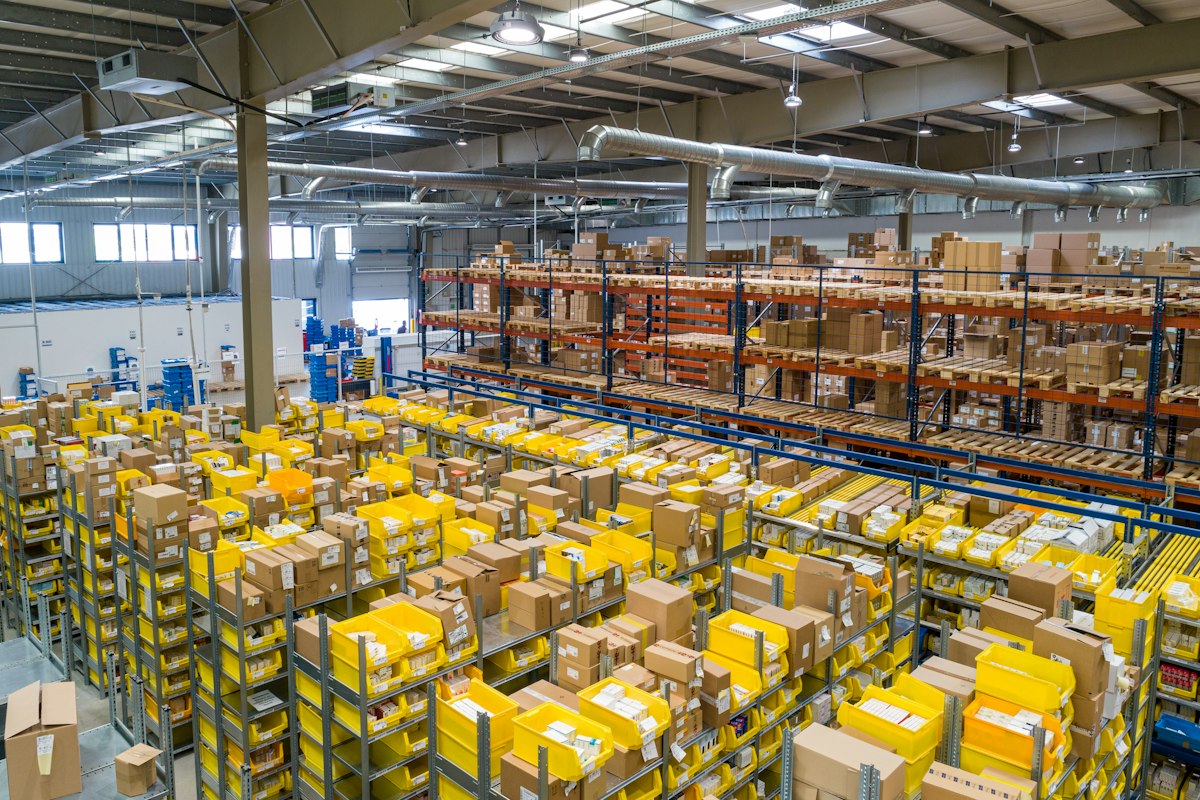
AI warehouse management is no longer a future concept reserved for mega-retailers—it is the operational standard that competitive businesses are adopting right now. As consumer expectations for same-day delivery intensify and labor costs climb, machine learning gives distribution centers the ability to do more with less: fewer errors, shorter cycle times, and smarter use of every square foot. DigitalHubAssist, through its LogisticHubAssist vertical, partners with enterprise logistics teams to deploy AI warehouse management systems that integrate with existing WMS platforms and deliver measurable results from day one.
AI warehouse management is the application of machine learning algorithms, computer vision, and predictive analytics to automate and optimize core warehouse functions—including inventory slotting, order picking, fulfillment routing, labor scheduling, and quality control—so that distribution centers achieve higher throughput, lower error rates, and greater cost efficiency without proportional headcount increases.
According to McKinsey & Company, AI-powered warehouse automation can reduce operational costs by 20–35% and increase order throughput by up to 50% within the first 18 months of deployment. These numbers are why global logistics leaders are accelerating investment: Gartner projects that by 2027, 75% of large distribution centers will have deployed some form of AI-driven operations management, up from fewer than 30% in 2024.
Why AI Warehouse Management Is a Strategic Priority in 2026
Supply chain disruptions, rising fulfillment expectations, and persistent labor shortages have created a perfect storm for warehousing operations. Traditional warehouse management systems were designed for predictable, high-volume flows—not the volatile, multi-channel demand patterns that define commerce today. When a single fulfillment center handles direct-to-consumer orders, B2B bulk shipments, and marketplace returns simultaneously, static logic fails.
Machine learning changes the equation by learning from historical order patterns, real-time sensor data, and external signals—weather, promotions, carrier delays—to dynamically adapt picking routes, replenishment schedules, and staffing levels. Forrester Research found that enterprises using AI-driven warehouse systems saw a 42% reduction in mis-picks and a 29% improvement in on-time shipment rates compared to peers using rule-based WMS alone.
For DigitalHubAssist clients in the retail, e-commerce, and third-party logistics sectors, AI warehouse management directly supports the demand forecasting and inventory optimization capabilities already deployed through RetailHubAssist—creating a closed loop from demand signal to fulfilled order.
Core AI Capabilities Transforming Warehouse Operations
AI warehouse management is not a single technology—it is a layered system of interoperating machine learning models, each targeting a specific operational friction point. DigitalHubAssist structures its LogisticHubAssist deployments around four capability pillars:
Intelligent inventory slotting. Traditional slotting assigns SKUs to fixed locations based on velocity alone. AI slotting engines continuously recalculate optimal storage locations by correlating velocity with co-purchase patterns, physical dimensions, replenishment lead times, and seasonal signals. Accenture reports that AI-driven slotting reduces average travel distance per pick by 18–27%, which in high-volume facilities translates directly into labor savings and faster cycle times.
Predictive pick path optimization. Rather than optimizing each order in isolation, AI batching and routing algorithms group orders with shared SKU clusters and generate warehouse-wide pick waves that minimize congestion and maximize throughput. Gartner's 2025 Supply Chain Technology Survey found that facilities using AI pick path optimization reduced labor hours per order by 31% compared to traditional zone-pick operations.
Real-time demand sensing and replenishment. AI models monitor inbound sales velocity, carrier ETAs, and upstream supplier lead times simultaneously, triggering proactive replenishment before stockouts occur at the pick face. McKinsey estimates that demand-driven replenishment automation reduces overstock carrying costs by 15–22% and prevents an average of $1.2 million in annual stockout-related fulfillment failures for mid-size distribution centers.
Computer vision quality control. Cameras paired with convolutional neural networks inspect outbound parcels for wrong items, damaged goods, and mis-labeling at conveyor speed—catching errors that human auditors miss under volume pressure. HubSpot's Operations State of the Industry Report (2025) highlights that AI-powered QC at the pack station reduces return rates by up to 19%, with direct impact on customer satisfaction scores and reverse logistics costs.
How LogisticHubAssist Delivers AI Warehouse Management at Scale
DigitalHubAssist's LogisticHubAssist platform is purpose-built for enterprise logistics operations that need AI capabilities without a full-stack rip-and-replace. The platform integrates via API with major WMS vendors—Manhattan Associates, Blue Yonder, SAP EWM, and Oracle WMS—overlaying AI intelligence on top of existing process infrastructure.
A typical LogisticHubAssist engagement begins with a 30-day data audit: historical order flows, current slotting logic, labor utilization reports, and return reason codes are ingested and analyzed to identify the three highest-value optimization opportunities for that specific facility. This diagnostic-first approach ensures that AI deployment effort is concentrated where ROI is fastest, typically producing payback within 9–14 months for Tier 1 deployments.
For multi-site enterprise clients, LogisticHubAssist builds cross-facility AI models that share demand intelligence across the distribution network—enabling network-level inventory balancing and intelligent order routing to the optimal fulfillment node based on proximity, capacity, and SKU availability. This network-level visibility is a capability that single-facility WMS systems fundamentally cannot provide.
Measuring ROI: What Enterprise Leaders Report After Deployment
Return on investment from AI warehouse management is measurable across four dimensions: labor efficiency, order accuracy, inventory carrying costs, and customer experience metrics. Across LogisticHubAssist client deployments in 2024–2025, DigitalHubAssist has observed the following average performance improvements:
- Order pick accuracy improved from an average of 98.1% to 99.7%—a 1.6-point gain that eliminates thousands of error-driven returns annually at scale.
- Fulfillment cycle time (order receipt to carrier scan) reduced by an average of 38%, enabling same-day shipping cutoffs to be extended by 90–120 minutes.
- Labor cost per unit shipped decreased by 24% over 12 months, primarily through AI-optimized batch picking and dynamic task interleaving.
- Inventory carrying costs declined by 17% as AI replenishment models eliminated the safety stock buffers that rule-based systems demand.
These gains compound: faster fulfillment reduces expedite costs, higher accuracy reduces returns handling, and leaner inventory frees working capital. Forrester's Total Economic Impact analysis of AI warehouse management deployments found a three-year ROI of 218% for enterprise facilities with over 500,000 annual orders.
Implementation Roadmap: From Pilot to Full Deployment
DigitalHubAssist recommends a phased approach to AI warehouse management implementation that minimizes operational risk while building organizational confidence in machine learning-driven decisions:
Phase 1 — Data foundation and baseline (weeks 1–6): Establish clean data feeds from the WMS, ERP, and warehouse control systems. Audit order data, slotting history, and labor records. Identify the pilot zone or SKU category with the highest error or cost concentration.
Phase 2 — Pilot deployment (weeks 7–16): Deploy AI slotting and pick optimization within the designated pilot zone. Run AI recommendations in parallel with existing logic; compare outcomes before switching. Capture labor, accuracy, and throughput metrics daily.
Phase 3 — Validated expansion (weeks 17–32): Extend AI models to full facility operations, activating demand sensing and replenishment automation. Integrate with transportation management system for end-to-end order visibility.
Phase 4 — Network intelligence (month 9+): For multi-site clients, connect facility models into a network AI layer that balances inventory and routes orders intelligently across the distribution footprint.
Frequently Asked Questions About AI Warehouse Management
What exactly is AI warehouse management?
AI warehouse management refers to the use of machine learning, computer vision, and predictive analytics to automate and continuously optimize warehouse operations—including inventory slotting, order picking, replenishment, labor scheduling, and quality control. Unlike traditional WMS rules, AI models learn from live operational data and adapt in real time to changing demand patterns, staffing levels, and carrier conditions.
How does machine learning improve order fulfillment speed?
Machine learning improves fulfillment speed by grouping orders intelligently into pick waves that minimize travel distance, predicting demand spikes before they occur so inventory is pre-positioned at the pick face, and dynamically routing labor to the highest-priority tasks. DigitalHubAssist clients using LogisticHubAssist have extended same-day shipping cutoffs by up to 120 minutes without adding headcount.
What ROI can businesses expect from AI warehouse management?
Based on Forrester Research's Total Economic Impact analysis and DigitalHubAssist client outcomes, enterprise facilities with over 500,000 annual orders typically achieve a three-year ROI of 180–220% from AI warehouse management. Key drivers include 24–35% labor cost reduction per unit shipped, 1–2 percentage point improvements in order accuracy, and 15–22% reductions in inventory carrying costs.
Does AI warehouse management require replacing existing WMS software?
No. DigitalHubAssist's LogisticHubAssist platform is designed to integrate via API with leading WMS solutions—including Manhattan Associates, Blue Yonder, SAP EWM, and Oracle WMS—adding AI intelligence as a layer on top of existing operational infrastructure. This approach protects prior WMS investment while delivering AI optimization capabilities in weeks, not years.
Which industries benefit most from AI warehouse management?
AI warehouse management delivers the highest ROI in high-SKU-count, high-velocity environments: e-commerce and omnichannel retail, third-party logistics (3PL), consumer goods distribution, pharmaceutical wholesalers, and automotive parts distribution. DigitalHubAssist serves all of these verticals through LogisticHubAssist and its broader AI consulting practice.
The Bottom Line
AI warehouse management is the operational lever that separates distribution centers meeting 2026 fulfillment expectations from those falling behind. The combination of intelligent slotting, AI-optimized pick waves, real-time demand sensing, and computer vision quality control delivers compounding returns across labor efficiency, order accuracy, and inventory cost—returns that rule-based WMS systems simply cannot replicate.
DigitalHubAssist's LogisticHubAssist practice gives enterprise logistics teams a structured path to AI deployment: diagnostic-first, integrated with existing infrastructure, and focused on the measurable outcomes that CFOs and COOs need to see within the first year. For organizations ready to close the gap between where their warehouses are today and where competitive fulfillment demands they be, the conversation starts at DigitalHubAssist's AI consulting practice.