AI Hyper-Personalization at Scale: How Enterprises Deliver 1:1 Customer Experiences Across Every Channel in 2026
Learn how enterprise AI hyper-personalization strategies enable businesses to deliver individualized experiences at scale—and why organizations using AI-driven 1:1 personalization grow revenue up to 40% faster than competitors.
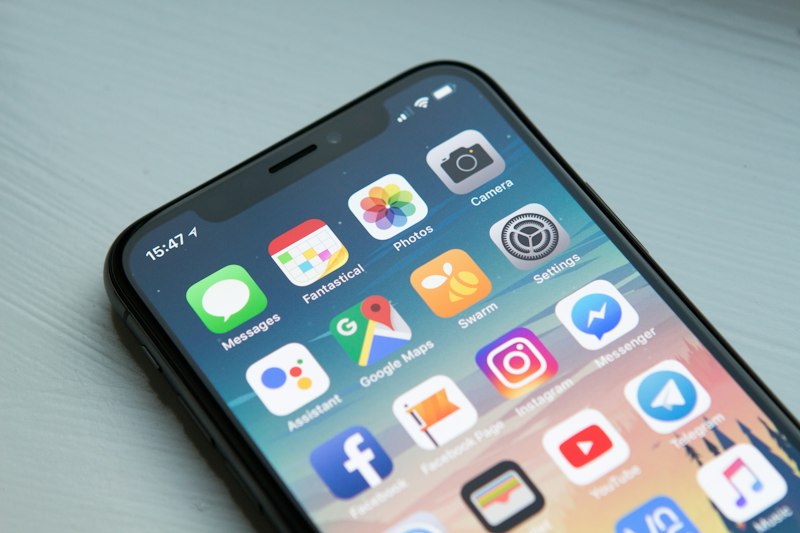
AI hyper-personalization for enterprise is the practice of using machine learning, real-time behavioral data, and generative AI to deliver individualized customer experiences—at the speed and scale that human teams cannot match. Unlike traditional segmentation, which groups customers into broad buckets, hyper-personalization treats each individual as a segment of one, dynamically adapting content, offers, pricing, and channel timing in milliseconds.
AI Hyper-Personalization (enterprise definition): The use of artificial intelligence—including predictive models, large language models, and real-time data pipelines—to generate unique, contextually relevant interactions for each customer across every digital and physical touchpoint, updated continuously as behavior, preferences, and intent signals evolve.
According to McKinsey & Company, organizations that excel at personalization generate 40% more revenue from those activities than average players. Yet most enterprises still rely on static segments and batch campaigns that deliver the right message days or weeks too late. In 2026, the gap between personalization leaders and laggards has become a defining competitive factor across retail, financial services, telecommunications, and healthcare.
DigitalHubAssist works with enterprises across multiple industries to design and deploy AI hyper-personalization strategies that operate at scale—connecting customer data, AI models, and delivery channels into a single, measurable system.
Why Traditional Personalization Is No Longer Enough for AI Hyper-Personalization Enterprise Goals
Classic personalization relies on rules: if a customer is female, aged 35–45, and lives in the Southwest, show them offer X. This approach has three critical failures in 2026. First, rules cannot keep pace with the velocity of behavioral signals—a customer's intent changes within a single session. Second, rule-based systems require constant manual updating, creating organizational debt that slows innovation. Third, they cannot account for the multi-dimensional nature of modern customer identity, which spans purchase history, browsing behavior, support interactions, social signals, and location context simultaneously.
AI hyper-personalization replaces static rules with dynamic models. A machine learning system continuously ingests behavioral signals—clicks, dwell time, cart abandonment, support tickets, in-store visits—and recalculates propensity scores in real time. Forrester Research found that AI-driven personalization leaders grow revenue 20% faster than average-performing companies, largely because their systems can act on intent signals before customers move on to a competitor.
Accenture reports that 91% of consumers are more likely to shop with brands that recognize and remember them with relevant offers. But recognition alone is not enough. The same study found that 83% of consumers are willing to share their data in exchange for a personalized experience—provided they trust the brand and see clear value in the exchange. AI enables brands to make that value visible through relevance, not just through discounts.
The Architecture of Enterprise AI Hyper-Personalization at Scale
Building a hyper-personalization capability at enterprise scale requires four interconnected layers working in real time.
Layer 1 — Unified Customer Data: Hyper-personalization starts with a complete, up-to-date view of each customer. Enterprises must consolidate data from CRM systems, transactional databases, behavioral analytics platforms, mobile apps, and third-party enrichment sources into a real-time customer profile. This layer is often addressed through an AI-powered customer data platform (CDP) that resolves identity across channels and continuously updates profile attributes.
Layer 2 — AI Decisioning Engine: The AI layer contains the models that determine what to show, when to show it, and through which channel. This includes recommendation models (collaborative filtering, content-based, hybrid), next-best-action models, churn propensity scores, and generative AI components that draft personalized copy, subject lines, or product descriptions at the individual level. Gartner projects that by 2026, 75% of large enterprises will have invested in AI-powered personalization engines, up from fewer than 35% in 2022.
Layer 3 — Real-Time Delivery Infrastructure: Personalization decisions are only valuable if they can be delivered within the interaction window. This requires sub-100ms API response times from decisioning engines, edge caching of personalized assets, and integration with every delivery channel—email, SMS, push notifications, web, in-app, call center, and point-of-sale systems. Enterprises that cannot close the loop between decision and delivery lose the value of real-time AI entirely.
Layer 4 — Experimentation and Measurement: AI hyper-personalization is not a static deployment. Continuous A/B and multivariate testing determines which model outputs drive the best outcomes. Enterprises must instrument every touchpoint with conversion, engagement, and revenue metrics, then feed those results back into model training. HubSpot's 2025 State of Marketing report found that companies running continuous personalization experiments achieve 34% higher email click-through rates and 28% higher conversion rates than those running quarterly campaigns.
Industry Applications: How DigitalHubAssist Verticals Deploy Hyper-Personalization
Retail (RetailHubAssist): AI hyper-personalization in retail extends beyond product recommendations. RetailHubAssist clients use real-time behavioral signals to dynamically reorder homepage content, surface size-specific inventory alerts, adjust promotional thresholds based on individual price sensitivity, and trigger cart recovery messages within the optimal abandonment window—typically 23–47 minutes, which varies by customer segment and product category. Enterprises using this approach report a 15–25% lift in average order value.
Financial Services (FinanceHubAssist): In financial services, hyper-personalization must balance relevance with regulatory compliance. FinanceHubAssist deploys AI models that identify which customers are in a life-stage transition—a recent job change, home purchase, or retirement planning window—and surface the right product at the right moment through the right advisor channel. AI ensures that personalized offers remain within compliance guardrails while maximizing conversion. McKinsey estimates that banks deploying AI personalization at scale can increase cross-sell revenue by 10–20%.
Telecommunications (TelcoHubAssist): Telecom carriers face one of the most challenging personalization environments: high churn rates, complex product catalogs, and customers who interact primarily at moments of frustration. TelcoHubAssist uses AI to identify early churn signals—network complaint patterns, data usage spikes, competitor inquiry behavior—and proactively deliver retention offers personalized to each subscriber's plan history, usage profile, and lifetime value. Enterprises using this approach reduce voluntary churn by 12–18% annually.
Healthcare (MedicalHubAssist): Personalization in healthcare operates under strict HIPAA constraints, but the opportunity for impact is substantial. MedicalHubAssist deploys AI personalization within patient engagement workflows to deliver appointment reminders, care gap notifications, and wellness content tuned to each patient's diagnosis history, care preferences, and communication channel preferences. Personalized care outreach reduces no-show rates by up to 30% and improves chronic disease management adherence significantly.
Overcoming the Three Core Challenges of Enterprise AI Hyper-Personalization
Challenge 1 — Data Fragmentation: Most enterprises store customer data across 15–40 different systems with no unified identity resolution layer. DigitalHubAssist recommends starting with a scoped data unification initiative—targeting the three to five systems that contain 80% of behavioral signal value—before attempting full enterprise integration. A phased approach delivers faster time-to-value and reduces project risk.
Challenge 2 — Model Governance and Bias: Personalization models trained on historical data can amplify existing biases—recommending premium products only to high-income demographics, or systematically under-serving certain geographic segments. Enterprises must implement model monitoring frameworks that track recommendation diversity, fairness metrics, and business outcome distribution across customer cohorts. Forrester found that enterprises with formalized AI model governance frameworks are 2.3x more likely to scale personalization successfully than those without.
Challenge 3 — Organizational Silos: Technology alone does not create hyper-personalization. The marketing, product, data science, and IT teams that build and operate personalization systems must share data, metrics, and accountability. Enterprises that establish a cross-functional personalization Center of Excellence—with shared dashboards and aligned OKRs—achieve full deployment 40% faster than those operating in siloed functions, according to DigitalHubAssist's client implementation data.
Measuring ROI from AI Hyper-Personalization
Enterprises measuring the return on AI hyper-personalization investments should track three categories of metrics. Revenue metrics include conversion rate lift (personalized vs. control), average order value increase, and incremental revenue attributable to personalization interactions. Engagement metrics include click-through rate improvement, session depth, and return visit frequency. Retention metrics include churn rate reduction, net promoter score changes among personalized cohorts, and customer lifetime value growth. McKinsey research indicates that enterprises that rigorously measure personalization ROI across all three categories are 60% more likely to increase their AI investment in subsequent budget cycles.
DigitalHubAssist clients in retail and financial services routinely achieve a 4–8x return on AI personalization infrastructure investment within 18 months of full deployment. The key driver is the compounding effect: as models accumulate more behavioral data, recommendation accuracy improves, which increases engagement, which generates more data, which further improves the models.
For enterprises beginning their AI hyper-personalization journey, DigitalHubAssist recommends reviewing the DigitalHubAssist blog for complementary frameworks on AI data strategy, customer data platforms, and AI governance—all foundational capabilities for a successful personalization program.
Frequently Asked Questions: AI Hyper-Personalization for Enterprise
What is the difference between personalization and AI hyper-personalization?
Traditional personalization uses predefined rules or segments to tailor experiences—for example, showing different homepage banners to different age groups. AI hyper-personalization uses machine learning to create a unique experience for each individual customer based on real-time behavioral signals, contextual data, and predictive models, without relying on static rules. The result is experiences that adapt dynamically as customer intent changes, rather than once per campaign cycle.
How much data does an enterprise need to start AI hyper-personalization?
There is no minimum data threshold required to begin, but personalization models generally perform meaningfully better after accumulating at least 6–12 months of behavioral history for a representative customer cohort. Enterprises can start with a narrowly scoped use case—such as email subject line personalization or product recommendation on a single category page—using existing CRM and web analytics data, and expand the program as model performance improves and data infrastructure matures.
Is AI hyper-personalization compliant with GDPR, CCPA, and HIPAA?
AI hyper-personalization can be fully compliant with major privacy regulations when implemented correctly. Compliance requires clear consent management (knowing which customers have opted in to data-driven personalization), purpose limitation (using data only for the declared purpose), data minimization (collecting only what is necessary for the personalization use case), and—for healthcare environments under HIPAA—strict access controls and audit trails. DigitalHubAssist designs all personalization architectures with privacy-by-design principles embedded from the initial data layer.
How long does it take to deploy enterprise AI hyper-personalization?
A scoped initial deployment—typically covering one channel (email or web) and one product category—can be operational in 60–90 days with the right data infrastructure in place. A full enterprise-wide deployment covering all channels, all product lines, and all customer segments typically requires 9–18 months. The timeline depends primarily on data readiness (how unified and accessible customer data already is) and organizational alignment (whether cross-functional teams share metrics and accountability).
What AI technologies power enterprise hyper-personalization?
Modern enterprise hyper-personalization stacks typically combine collaborative filtering and content-based recommendation models, gradient-boosted decision trees or deep learning models for propensity scoring, large language models for generative content personalization (personalized email copy, product descriptions, chatbot responses), and real-time feature stores that serve model inputs at sub-100ms latency. The technology stack is less important than the data quality, model governance, and organizational processes that surround it.
The Competitive Imperative in 2026
AI hyper-personalization has moved from a competitive differentiator to a competitive baseline in 2026. Enterprises that have already deployed AI-driven 1:1 personalization are extending their lead in customer retention, average order value, and brand preference—while those still relying on batch campaigns and static segments are ceding ground to AI-native competitors who can respond to customer intent in real time.
DigitalHubAssist helps enterprises across retail, financial services, telecommunications, and healthcare design, build, and scale AI hyper-personalization programs that connect customer data, AI decisioning, and multichannel delivery into a measurable revenue growth system. Enterprises ready to move from segmentation to individualization should explore DigitalHubAssist's full content library or contact DigitalHubAssist to begin an AI personalization readiness assessment tailored to their industry and technology environment.