AI-Powered Quality Control: How Enterprises Use Computer Vision and Machine Learning to Eliminate Defects and Cut Warranty Costs in 2026
AI quality control is transforming manufacturing, healthcare, and logistics. Discover how enterprises deploy computer vision and machine learning to catch defects in real time, cut warranty claims by up to 40%, and build consistent product quality at scale.
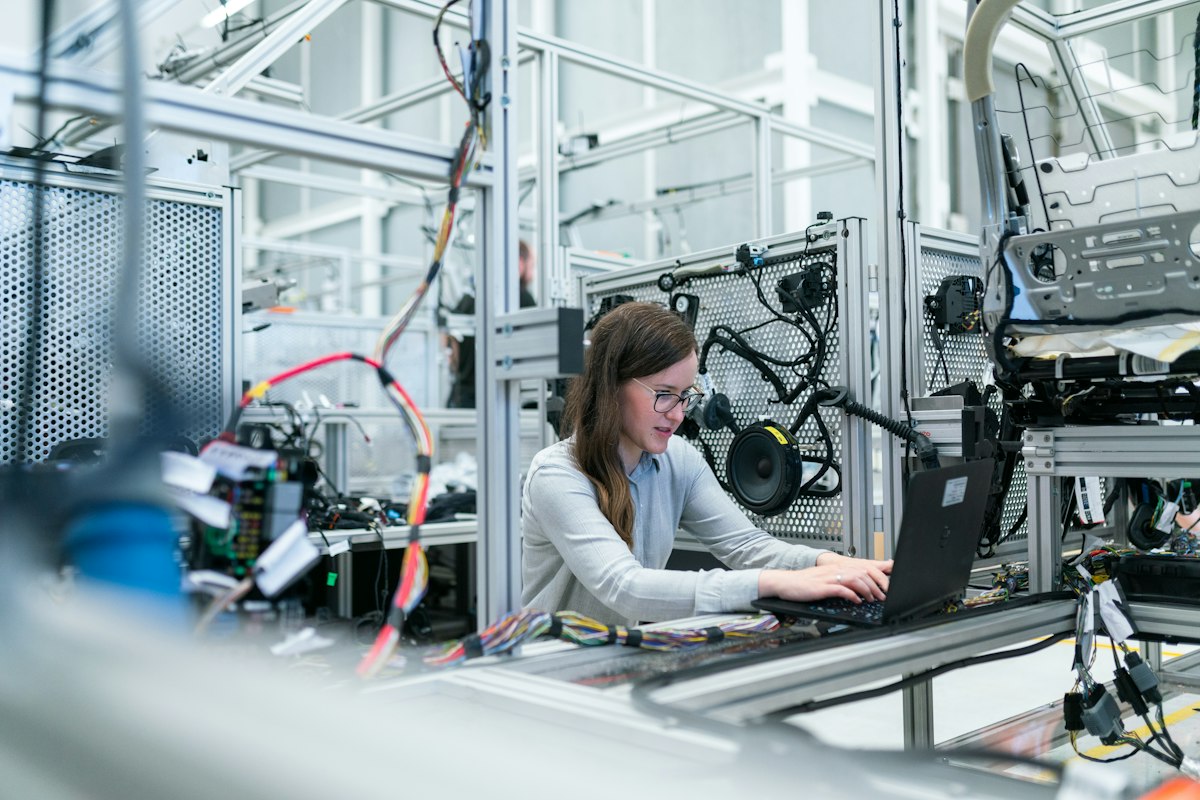
AI quality control is redefining what it means to ship a defect-free product. In 2026, leading manufacturers, healthcare device makers, and logistics operators are replacing slow, error-prone manual inspection with intelligent computer vision systems that detect anomalies in milliseconds—at a fraction of the cost. For enterprises facing rising warranty claims, customer returns, and compliance pressure, AI-powered defect detection is no longer a competitive advantage. It is an operational requirement.
AI quality control refers to the application of computer vision, machine learning, and deep neural networks to automate the inspection of products, components, or processes—identifying defects, dimensional deviations, and surface anomalies with greater speed, accuracy, and consistency than human inspectors can achieve under production conditions.
According to McKinsey & Company, manufacturers that deploy AI-powered visual inspection reduce defect escape rates by up to 90% compared to manual inspection, while cutting quality-related costs by 20–40% across the production lifecycle. For enterprises producing thousands or millions of units per day, that margin is transformational.
Why Traditional Quality Inspection Is Failing Enterprises in 2026
Manual quality inspection has three structural weaknesses that compound as production scales. First, human inspectors fatigue—Gartner research shows that inspector accuracy drops by nearly 30% after 20 minutes of continuous visual scanning. Second, manual inspection creates bottlenecks: a single inspector evaluates only a fraction of the output that modern high-speed production lines generate. Third, human judgment is inconsistent, producing pass/fail decisions that vary by inspector, shift, and ambient lighting conditions.
The consequences are measurable. A 2025 Forrester report found that quality escapes—defects that pass inspection and reach end customers—cost global manufacturers an average of $1.2 million per recall event, not counting downstream reputational damage. For healthcare device manufacturers, a single quality escape can trigger FDA enforcement action. For automotive tier-one suppliers, it can mean the loss of an OEM contract worth hundreds of millions.
AI quality control addresses all three failure modes simultaneously. Cameras and sensors capture images or measurements at production-line speeds. Deep learning models trained on thousands of defect examples classify each unit in real time. The system applies identical decision criteria across every shift, every facility, and every product variant—with no fatigue, no variance, and no missed micro-defects.
How AI Quality Control Works: Computer Vision at Production Speed
A modern AI quality control system has four core components. The imaging layer uses high-resolution industrial cameras, infrared sensors, X-ray scanners, or 3D structured-light systems positioned at critical inspection points. The AI inference engine—typically a convolutional neural network (CNN) or transformer-based vision model—is trained on labeled images of acceptable and defective products. The decision layer classifies each unit as pass, fail, or escalate-for-review within milliseconds. A continuous feedback loop retrains the model on new defect patterns discovered in production, keeping accuracy high as materials and processes evolve.
Accenture's 2025 Industry X report found that AI-powered visual inspection systems achieve defect detection rates above 99.5% on high-volume production lines, outperforming human inspection teams by a statistically significant margin in controlled trials across automotive, electronics, and consumer goods manufacturing. Critically, AI systems produce consistent false-positive rates—they reject good parts at a calibrated, predictable rate that quality engineers can tune against process tolerance requirements.
DigitalHubAssist helps enterprises across multiple verticals deploy AI quality control systems tailored to their production environments and regulatory requirements. For manufacturing clients, the focus is on surface defect detection and dimensional measurement. For medical device manufacturers served by MedicalHubAssist, the priority shifts to FDA-grade traceability and audit-ready inspection records. For logistics and fulfillment clients working with LogisticHubAssist, AI quality control catches packaging errors, label mismatches, and shipment discrepancies before orders leave the warehouse.
Industry-Specific AI Quality Control Use Cases
The value of AI quality control varies by vertical, but the pattern is consistent: enterprises that adopt intelligent inspection recover the investment within 12–18 months and achieve sustained quality improvements that compound over time.
Electronics manufacturing. Printed circuit board (PCB) inspection is one of the most demanding quality challenges in manufacturing. Boards may have hundreds of solder joints, components, and traces that must be verified for correct placement, orientation, and electrical connection quality. AI vision systems trained on PCB defect libraries inspect boards at line speed, flagging bridged solder joints, missing components, and tombstoned capacitors that manual operators routinely miss. DigitalHubAssist's computer vision deployments for electronics clients have achieved defect detection accuracy above 99.7%, with per-board cycle times under 200 milliseconds.
Food and beverage. RetailHubAssist clients in the food supply chain use AI vision to inspect packaging integrity, label accuracy, fill levels, and foreign object contamination in real time. A 2025 McKinsey analysis found that AI-powered food quality systems reduce product recalls by 60% and cut the cost of human inspection labor by 35%. For retailers with private-label brands, these systems also verify that packaging matches current label regulations—a compliance requirement that changes frequently across regional markets.
Healthcare device manufacturing. MedicalHubAssist partners with medical device manufacturers to implement AI inspection systems compliant with 21 CFR Part 820 (Quality System Regulation). These systems produce complete, time-stamped inspection records for every unit—records automatically indexed for FDA audit queries. AI models trained on device-specific defect libraries flag dimensional out-of-tolerance conditions, surface scratches, and assembly errors with the precision required for Class II and Class III device clearances.
Logistics and fulfillment. LogisticHubAssist deploys AI quality control at warehouse receiving docks and packing stations. Computer vision systems verify that inbound shipments match purchase order specifications, that outbound orders are packed correctly, and that labels carry accurate barcodes and destination addresses. Enterprises using AI-powered fulfillment inspection report 40% reductions in order error rates and measurable improvements in customer satisfaction scores within six months of deployment.
Measuring the ROI of AI Quality Control
AI quality control ROI comes from four sources that DigitalHubAssist quantifies before recommending any deployment. First, warranty cost reduction: fewer defects reaching customers means fewer warranty claims, field service dispatches, and replacement shipments. For enterprises with warranty reserves above $10 million annually, a 30% reduction in claims frequently delivers payback in under 12 months. Second, labor reallocation: inspection headcount that previously focused on routine visual checking can be redirected to exception handling, root cause analysis, and process improvement, where human judgment adds genuine value. Third, yield improvement: AI systems that detect early-stage process drift—identifying a machine setting moving out of tolerance before it produces defective units—prevent defects rather than just detecting them after the fact. Fourth, compliance cost reduction: automated inspection records eliminate manual documentation labor and reduce audit preparation time by 50–70%, according to a 2025 Forrester analysis of regulated manufacturing environments.
Gartner's 2026 Manufacturing Technology analysis positions AI quality control among the highest-ROI digital manufacturing investments, noting that enterprises with mature AI inspection programs report 15–25% reductions in overall cost of quality (CoQ) within two years of full deployment. Enterprises that delay adoption face an increasing cost and quality disadvantage relative to competitors who have already automated their inspection processes.
To understand how AI quality control fits into a broader digital transformation strategy, explore DigitalHubAssist's resources on AI implementation roadmaps for enterprise operations.
Frequently Asked Questions About AI Quality Control
How accurate is AI quality control compared to human inspection?
AI quality control systems consistently outperform human inspectors on high-volume, repetitive inspection tasks. Research from Gartner and McKinsey shows that AI-powered visual inspection achieves defect detection rates above 99% on trained defect classes, while human inspectors typically operate at 70–85% accuracy under real production conditions due to fatigue, attention variability, and the physical limits of human vision on micro-scale defects. The accuracy gap is most pronounced for surface defects below 0.1mm, solder joint voids, and film contamination requiring consistent lighting conditions to detect reliably.
What industries benefit most from AI quality control?
AI quality control delivers measurable ROI across electronics manufacturing, automotive parts, food and beverage processing, pharmaceutical packaging, medical device assembly, and logistics fulfillment. Industries with high defect costs, strict regulatory inspection requirements, or high-speed production lines see the fastest payback periods. DigitalHubAssist's vertical solutions—MedicalHubAssist, RetailHubAssist, and LogisticHubAssist—serve three of the highest-adopting sectors for AI quality systems as of 2026.
How long does it take to deploy an AI quality control system?
A focused AI quality control deployment on a single inspection point typically takes 8–16 weeks from imaging assessment to production launch. The timeline includes camera installation, training data collection and labeling, model training and validation, production system integration, and operator training. Enterprise-wide rollouts across multiple facilities and product lines typically span 6–18 months. DigitalHubAssist accelerates deployment using pre-trained industrial vision models that require substantially less labeled data and reach production-ready accuracy faster than models built from scratch.
Does AI quality control eliminate the need for human inspectors?
AI quality control changes the role of human inspectors rather than eliminating it. Automated systems handle routine pass/fail decisions at line speed, while inspectors focus on exception review, root cause investigation, and process improvement projects. Most enterprises reduce inspection headcount by 30–50% through natural attrition, reallocating experienced inspectors to quality engineering roles with broader responsibilities. The net effect is a smaller, more skilled quality organization with greater analytical capacity and strategic impact.
Can AI quality control handle new product introductions?
Yes, with structured retraining procedures. When a new product variant enters production, the AI model must be updated with labeled images of the new product's acceptable and defective states. Modern AI quality control platforms support active learning workflows where the model flags uncertain cases for human review, rapidly building the training dataset needed for each new variant. DigitalHubAssist's managed AI quality services include new product introduction (NPI) support as a standard component of enterprise quality programs, ensuring model accuracy is validated before new variants enter full production.