AI Retail Space Planning: How Machine Learning Optimizes Store Layouts and Merchandising for Maximum Revenue in 2026
Retail chains that deploy AI-driven space planning tools report 8–15% higher sales per square foot. This guide explains how machine learning transforms planogramming, shelf optimization, and in-store merchandising — and why leading retailers are making it a competitive priority in 2026.
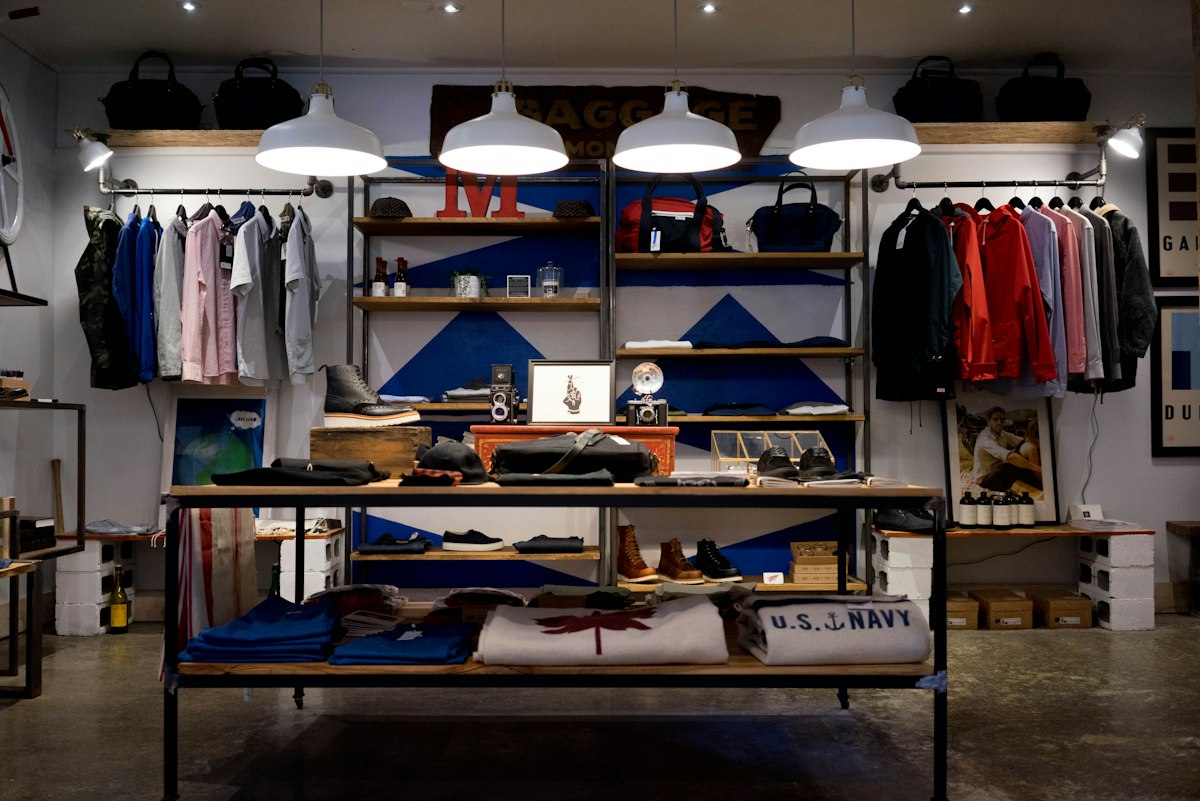
AI retail space planning is transforming how physical stores allocate floor space, position products, and manage merchandise assortments. Retailers that rely on static planograms and annual reset cycles are leaving measurable revenue on the table. Machine learning models now analyze transaction data, foot traffic patterns, demographic signals, and supplier performance metrics to generate dynamic, store-specific space plans that maximize sales per square foot.
AI retail space planning is the application of machine learning and predictive analytics to determine optimal product placement, shelf allocation, and store layout configurations — enabling retailers to increase revenue per square foot, reduce out-of-stock events, and respond to consumer demand shifts in near real time.
According to McKinsey & Company, retailers that apply AI-driven space planning and assortment optimization achieve 3–5% increases in same-store sales and reduce inventory carrying costs by up to 20%. For large-format retailers with thousands of SKUs across hundreds of locations, these gains compound into significant competitive advantages. DigitalHubAssist helps retail organizations implement these capabilities through RetailHubAssist, a purpose-built AI consulting practice for the retail sector.
Why Traditional Planogramming Falls Short
Traditional space planning relies on category managers who build planograms manually, guided by supplier negotiations, historical sales data, and periodic store resets. This approach has three structural weaknesses. First, it is inherently reactive — decisions reflect past performance, not forward-looking demand signals. Second, planograms are built at the category level rather than the store level, ignoring local demand variation. Third, reset cycles measured in quarters cannot keep pace with consumer preference shifts that occur in weeks.
Gartner research indicates that 67% of retail executives cite inability to localize assortments at scale as a top merchandising challenge. When a planogram optimized for a suburban family store is applied to an urban convenience format, the result is misallocated shelf space, elevated out-of-stock rates for high-velocity items, and wasted facings for low-velocity products that occupy prime real estate.
AI retail space planning solves these problems by modeling each store as an individual unit with its own demand profile, while applying enterprise-scale compute to generate recommendations that no human team could produce manually at the required speed and granularity.
How Machine Learning Powers Retail Space Optimization
Modern AI space planning systems ingest multiple data streams simultaneously: point-of-sale transaction records, loyalty program purchase histories, in-store computer vision feeds, supplier replenishment data, local demographic indices, and competitive pricing signals. Machine learning models trained on this data identify which product placements drive basket size, which adjacencies increase cross-category purchase rates, and which shelf heights capture attention for specific shopper demographics.
Space elasticity modeling is one of the most commercially impactful techniques in AI retail space planning. The model estimates how changes in shelf space allocation — measured in facings, rows, or linear feet — affect unit velocity for each SKU in each store. A retailer can then run simulated planogram scenarios and evaluate projected revenue and margin outcomes before committing to a physical reset. Accenture reports that retailers using space elasticity models reduce planogram reset costs by 30% by eliminating low-impact resets and focusing resources on high-ROI layout changes.
Computer vision integration adds a real-time dimension. Overhead cameras track shopper dwell time in front of shelf sections, measure how frequently shoppers pick up and replace items, and detect out-of-stock conditions within minutes rather than at the end of a replenishment cycle. These signals feed back into the space planning model, creating a continuous improvement loop that static planogramming cannot replicate.
DigitalHubAssist's RetailHubAssist practice deploys these capabilities for retail clients through a modular architecture that integrates with existing ERP, WMS, and POS platforms. This integration-first approach avoids disruptive system replacements while enabling AI-driven space planning on top of existing data infrastructure.
Specific Use Cases Generating Measurable ROI
Category space reallocation. A leading home improvement retailer that deployed AI space planning identified that seasonal categories were occupying 22% more space than demand warranted, while perennial high-velocity categories were space-constrained. Reallocating 15% of seasonal space to high-turn categories increased quarterly same-store sales by 4.3% without adding floor area.
Localized assortment pruning. Forrester research shows that the average retail chain carries 15–25% more SKUs than demand justifies when measured at the individual store level. Machine learning models identify slow movers in each specific store context, enabling retailers to rationalize assortments by location rather than by chain average — freeing shelf space for high-demand products and reducing inventory complexity across the network.
End-cap and promotional space optimization. End-caps and promotional gondolas represent a disproportionate share of revenue per square foot in most retail formats. AI models that analyze promotional response rates, traffic patterns, and seasonal demand cycles enable merchandising teams to allocate these premium positions to products with the highest lift probability. HubSpot's commerce research estimates that AI-optimized promotional placements generate 2.3x the revenue per square foot compared to manual allocation methods.
New store layout planning. When opening a new location, retailers traditionally apply a prototype planogram from a comparable existing store. AI retail space planning replaces this with a data-driven layout generated from the demographic profile, competitive landscape, and predicted demand mix of the specific new site — improving first-year performance before the store has produced any of its own sales history.
Implementation Considerations for Enterprise Retailers
Enterprise retailers considering AI space planning should evaluate four dimensions before selecting a technology approach. Data readiness is the starting point: the quality and granularity of POS transaction data, the availability of historical planogram records, and the existence of foot traffic measurement infrastructure determine which model types can be deployed immediately versus which require a data foundation investment first.
Integration architecture matters for operational adoption. Space planning recommendations that cannot flow automatically into existing planogram software, merchandise management systems, and replenishment workflows become another tool for analysts to consult rather than a system that drives execution. DigitalHubAssist's AI implementation advisors consistently find that integration depth is a stronger predictor of realized ROI than model sophistication alone.
Change management for category managers is frequently underestimated in AI space planning deployments. Category managers with years of institutional knowledge may resist recommendations that contradict their intuition. Successful deployments present AI recommendations as decision support rather than automated mandates, with clear explanations of the model's reasoning and mechanisms for managers to override recommendations and feed that override data back into future model training cycles.
Supplier relationship implications require early attention. Many retailers' supplier agreements include contractual shelf space commitments. AI space planning that reallocates space away from contracted positions creates potential commercial conflicts. Legal and commercial teams need to be engaged early in any AI space planning initiative to map contractual constraints and develop a roadmap for renegotiating agreements as AI recommendations demonstrate performance improvements.
Frequently Asked Questions
What data does AI retail space planning require to get started?
At minimum, AI retail space planning requires historical POS transaction data at the SKU-store-week level, current planogram configurations, and store-level attributes such as format, square footage, and demographic profile. More advanced models incorporate foot traffic data from camera systems or mobile location signals, promotional calendars, supplier replenishment records, and competitive pricing feeds. Retailers with two or more years of transaction history and consistent planogram documentation can begin generating space optimization recommendations without additional data infrastructure investment.
How long does it take to see ROI from AI space planning?
Most enterprise retailers that implement AI retail space planning report measurable sales lift within the first planogram reset cycle following deployment, typically 90–120 days after go-live. Full ROI realization, including the compounding effects of continuous model improvement and broader rollout across store formats, generally takes 12–18 months. McKinsey benchmarks indicate that retailers with mature AI space planning capabilities outperform category-average same-store sales growth by 200–400 basis points annually.
Can AI space planning be applied to small retail formats?
Yes. While large-format retailers with extensive transaction histories benefit most immediately, AI space planning tools have been successfully applied to convenience stores, specialty retailers, and pharmacy formats with as few as 500 active SKUs. For smaller formats, the highest-impact applications are typically end-cap optimization, category space reallocation, and seasonal assortment timing rather than full planogram generation across every category.
How does AI space planning interact with supplier category management programs?
AI space planning systems can ingest supplier-provided market data and competitive benchmarks, but they evaluate this data through the lens of the retailer's own performance metrics rather than the supplier's interests. Many leading retailers use AI space planning as leverage in supplier negotiations: when machine learning models identify that a supplier's recommended shelf space allocation underperforms relative to alternatives, the retailer has quantitative evidence to renegotiate terms or reallocate space to higher-performing options.
What is the difference between AI space planning software and traditional planogram tools?
Traditional planogram software is a visualization and layout tool — it helps category managers draw and communicate shelf arrangements but does not generate recommendations autonomously. AI retail space planning adds a prescriptive layer: machine learning models analyze performance data and generate space allocation recommendations, which category managers review and implement using traditional planogram tools. The two technologies are complementary, and most AI space planning deployments integrate with existing planogram software rather than replacing it.
The Competitive Imperative for Retail in 2026
Physical retail is undergoing a structural repositioning in which stores serve simultaneously as fulfillment nodes, experience centers, and brand touchpoints. In this context, AI retail space planning is no longer a niche efficiency tool — it is a strategic capability that determines whether a physical format remains economically viable against e-commerce alternatives and digitally native competitors.
Forrester projects that by the end of 2026, 60% of top-tier retail chains will have deployed AI-assisted space planning in at least a portion of their store network. Retailers that delay will face a compounding disadvantage: competitors using AI will capture demand more efficiently, generate higher margins per square foot, and reinvest those returns in further capability development that widens the performance gap over time.
DigitalHubAssist works with retail organizations across formats — from grocery and mass merchandise to specialty and convenience — to design and deploy AI retail space planning capabilities that fit existing technology architecture and commercial constraints. Through RetailHubAssist, enterprise retailers receive a structured implementation roadmap, data readiness assessment, model deployment support, and change management guidance designed to generate measurable ROI within the first year of deployment.
Retailers ready to evaluate AI space planning for their organization can explore additional resources on the DigitalHubAssist blog or request an AI readiness assessment to identify which data assets, integration points, and organizational capabilities are already in place — and which gaps need to be addressed before deployment begins.