AI Supply Chain Resilience: How Machine Learning Helps Enterprises Predict Disruptions and Reduce Costs in 2026
Global supply chains face constant disruption risk. DigitalHubAssist explains how machine learning delivers AI supply chain resilience—cutting logistics costs by 15%, reducing inventory excess by 30%, and shrinking disruption recovery time by 37%.
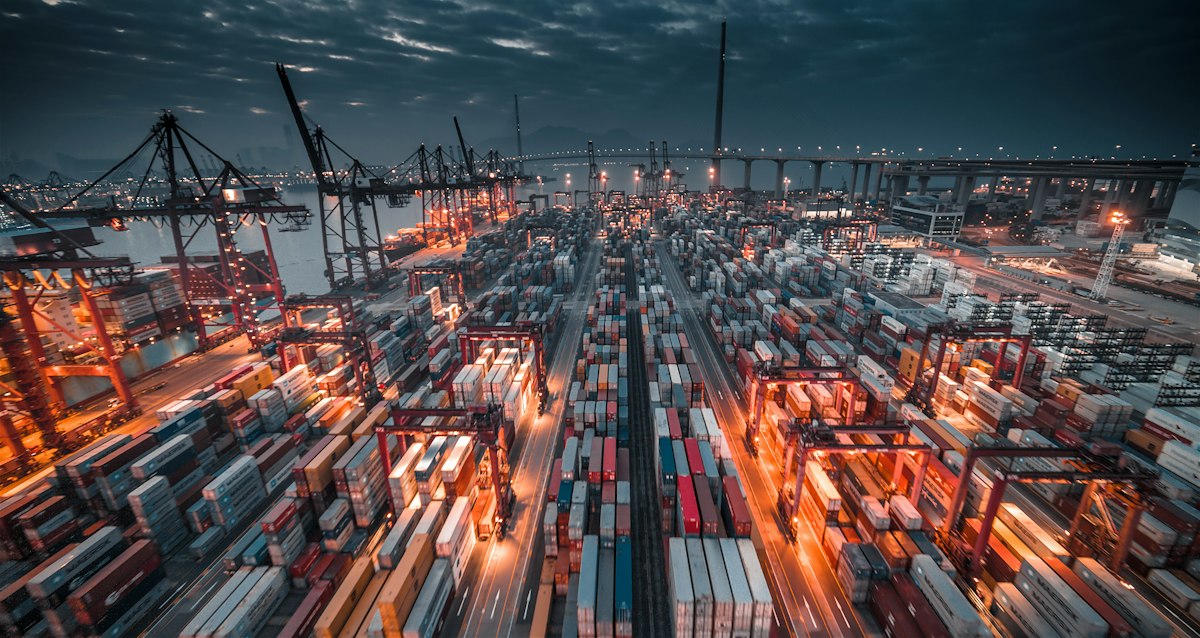
Global supply chains have never been more exposed. From pandemic-era shortages to geopolitical disruptions and extreme weather events, enterprises face constant pressure to anticipate and absorb shocks. AI supply chain resilience—the application of machine learning to predict, adapt to, and recover from supply chain disruptions—has moved from experimental to essential. According to McKinsey & Company, companies that actively use AI in supply chain management have reduced logistics costs by 15%, improved inventory levels by 35%, and boosted service levels by 65% compared to peers who rely on traditional forecasting methods.
AI supply chain resilience is the use of machine learning, predictive analytics, and intelligent automation to detect supply chain vulnerabilities before they escalate, enabling enterprises to reroute, rebalance, and recover faster than competitors still relying on static planning cycles.
DigitalHubAssist works with enterprises across logistics, retail, and manufacturing to deploy AI-powered supply chain solutions that go far beyond demand forecasting. The capabilities described in this article—from multi-tier supplier visibility to autonomous reorder logic—are part of the firm's end-to-end AI consulting practice. Clients in the logistics space leverage LogisticsHubAssist, while retailers building inventory intelligence rely on RetailHubAssist.
Why Traditional Supply Chain Planning Fails in a Disruption Economy
Legacy supply chain management relies on static safety stock formulas, annual supplier reviews, and siloed ERP data. This approach was designed for a stable world—not one where a single port closure, raw material shortage, or regulatory change can cascade across twenty suppliers in forty-eight hours. Gartner analysts project that by the end of 2026, 70% of supply chain leaders will have experienced at least one major disruption that their existing planning tools failed to anticipate. The mean cost of a single major supply chain disruption for a Fortune 500 company now exceeds $180 million in lost revenue and remediation costs.
The core problem is information latency. By the time a purchasing manager learns that a Tier 2 supplier has capacity constraints, the impact has already propagated upstream. Machine learning models trained on purchase orders, shipping manifests, satellite imagery, weather data, and supplier financial signals can surface these risks days or weeks before they materialize—giving procurement and logistics teams the window they need to act.
How Machine Learning Builds AI Supply Chain Resilience: Five Core Capabilities
1. Multi-Tier Supplier Risk Scoring
Most enterprises have visibility into Tier 1 suppliers but are blind to Tier 2 and Tier 3. AI models aggregate alternative data sources—including financial news, shipping lane congestion, natural language signals from supplier communications, and geopolitical risk indices—to assign dynamic risk scores to every node in the supply network. Accenture research found that companies using AI-powered supplier risk monitoring reduced unplanned production stoppages by 42% compared to firms using quarterly manual audits. LogisticsHubAssist's supplier intelligence module continuously monitors over 200 risk signals across a client's extended supply network.
2. Demand Sensing and Probabilistic Forecasting
Traditional demand forecasting relies on historical sales averages and seasonal adjustments. AI supply chain resilience requires demand sensing—combining point-of-sale data, web search trends, social sentiment, and macroeconomic signals to generate probabilistic forecasts with confidence intervals. RetailHubAssist's demand sensing engine updates forecasts every four hours, enabling clients to adjust replenishment orders before stockouts occur. Forrester Research notes that enterprises deploying machine learning for demand forecasting see a 20–30% reduction in excess inventory and a 15–25% improvement in in-stock rates.
3. Autonomous Reorder and Dynamic Safety Stock
Static reorder points are calculated once a year and rarely reflect actual supply variability. Machine learning models can set dynamic safety stock levels that respond to supplier lead time uncertainty, demand volatility, and current inventory positions—then trigger purchase orders autonomously within pre-approved parameters. HubSpot's operations benchmarking data indicates that companies using AI-driven procurement automation reduce manual purchase order processing costs by 54% and cut emergency sourcing events by 38%.
4. Disruption Simulation and Scenario Planning
AI-powered digital twins of supply networks allow enterprises to run thousands of disruption scenarios in minutes—simulating the impact of a factory closure, shipping lane blockage, or tariff change before it happens. DigitalHubAssist's consulting practice builds these simulation environments on top of clients' existing ERP and TMS data, enabling leadership to evaluate the cost and feasibility of alternative sourcing strategies before a crisis forces the decision. McKinsey's 2026 Operations Report found that supply chain leaders using AI scenario planning reduced their average disruption recovery time by 37%.
5. Real-Time Logistics Visibility and Exception Management
Freight in transit is invisible on most traditional systems until it arrives—or doesn't. AI aggregates GPS telemetry, carrier API data, customs status feeds, and port congestion signals to give logistics teams real-time visibility across every shipment. Exception management algorithms automatically escalate at-risk deliveries to human operators while rerouting lower-priority freight. LogisticsHubAssist clients using the platform's shipment intelligence layer report a 28% reduction in on-time delivery failures and a 19% decrease in expediting costs.
The ROI Case for AI Supply Chain Resilience
Skeptics often frame supply chain AI as a cost center—expensive models solving problems that experienced planners already manage. The numbers tell a different story. A 2026 Gartner survey of 480 supply chain executives found that enterprises with mature AI capabilities generated 15% higher gross margins than industry peers, driven by lower carrying costs, fewer emergency procurement events, and better service levels that protected revenue. Accenture's Supply Chain Reinvention study puts the average ROI of a well-implemented AI supply chain program at 3.2× within 18 months of full deployment.
For mid-market enterprises that cannot absorb a major disruption the way a Fortune 100 can, the resilience argument is even more compelling. DigitalHubAssist designs AI supply chain programs scaled to companies with $50M–$2B in revenue, where a single disruption can threaten quarterly earnings. The firm's engagement model typically begins with a 90-day diagnostic that maps the current supply network, quantifies risk exposure, and identifies the three highest-ROI AI use cases to pursue first.
RetailHubAssist clients in the consumer goods sector have used AI inventory intelligence to maintain 97%+ in-stock rates during peak promotional periods, eliminating the lost-sale costs that previously eroded promotional ROI. Across DigitalHubAssist's logistics and retail practice, the median time to first measurable ROI on an AI supply chain engagement is eleven weeks.
Implementation Roadmap: From Pilot to Production
Enterprises that succeed with AI supply chain resilience programs share a common approach: they start with a constrained, high-value use case rather than attempting a full supply chain transformation. DigitalHubAssist recommends a three-wave implementation model:
- Wave 1 (Weeks 1–12): Deploy demand sensing for the top 20% of SKUs by revenue impact. Connect point-of-sale, ERP, and external signals. Establish baseline forecast accuracy metrics.
- Wave 2 (Weeks 13–26): Activate supplier risk scoring for Tier 1 and critical Tier 2 suppliers. Integrate real-time shipment visibility. Launch dynamic safety stock for high-velocity items.
- Wave 3 (Weeks 27–52): Build the full digital twin. Enable autonomous reorder within approved parameters. Expand supplier risk monitoring to full supply network. Integrate scenario planning into S&OP cycles.
This phased approach allows enterprise teams to build confidence in model outputs, align cross-functional stakeholders, and demonstrate ROI before committing to broader transformation. More on the firm's scaling methodology is available in the DigitalHubAssist insights library.
Frequently Asked Questions About AI Supply Chain Resilience
What data does an enterprise need to start an AI supply chain resilience program?
Most enterprises already have the foundational data: historical purchase orders, supplier lead times, ERP inventory records, and at least 18–24 months of demand history. DigitalHubAssist's diagnostic process identifies data gaps and supplements internal data with external signals—weather, geopolitical risk feeds, shipping lane congestion—available through third-party data providers. No Greenfield data infrastructure is required to begin.
How long does it take to see results from AI supply chain investments?
Based on DigitalHubAssist's delivery experience, enterprises see measurable forecast accuracy improvements within 6–8 weeks of deploying a demand sensing model trained on their historical data. Supplier risk scoring delivers actionable alerts within the first month. The full Wave 1–3 program typically generates documented ROI within 11 weeks of Wave 1 go-live, with cumulative ROI reaching the 3× threshold within 12–18 months for most mid-market deployments.
Can AI supply chain tools integrate with SAP, Oracle, or Microsoft Dynamics?
Yes. DigitalHubAssist builds AI supply chain solutions that integrate with the major ERP platforms via standard APIs and certified connectors. The AI layer augments existing systems rather than replacing them—planners continue working in familiar interfaces while machine learning models surface recommendations, anomaly alerts, and automated actions in the background. Integration timelines range from two to eight weeks depending on ERP version and available IT resources.
What is the difference between supply chain visibility and supply chain resilience?
Visibility means knowing where goods are and when they will arrive. Resilience means the organizational and technological capacity to absorb shocks and recover quickly when plans fail. AI supply chain resilience programs deliver both: real-time visibility as a foundation, and predictive, adaptive intelligence on top. Visibility without resilience is a rearview mirror; resilience without visibility is guesswork. DigitalHubAssist designs programs that deliver both capabilities in a unified platform.
Is AI supply chain resilience relevant for smaller enterprises, not just Fortune 500 companies?
Absolutely. Mid-market companies with $50M–$2B in revenue often carry proportionally more supply chain risk than large enterprises because they have less redundancy, smaller safety stock buffers, and fewer alternative supplier relationships. Cloud-based AI platforms have made enterprise-grade supply chain intelligence accessible to companies without dedicated data science teams. DigitalHubAssist specifically designs its LogisticsHubAssist and RetailHubAssist engagements for mid-market clients that want the same predictive capabilities as the Fortune 100 without the multi-year transformation timelines.