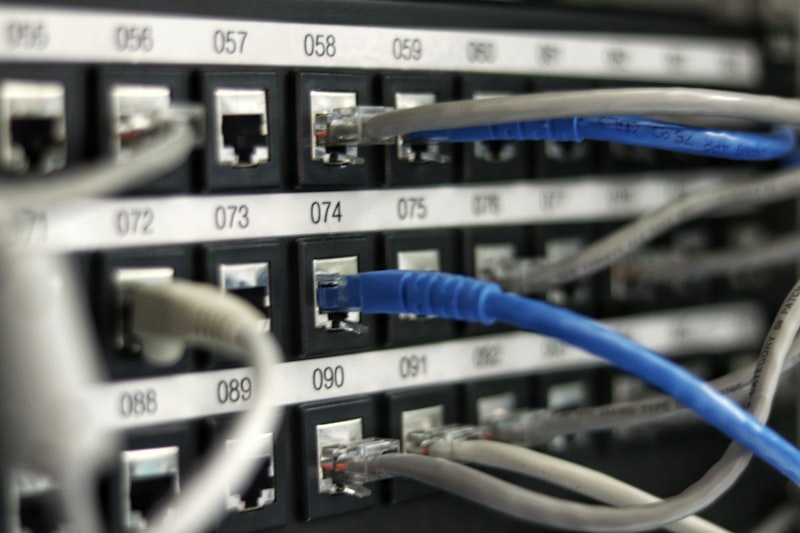
Private AI deployment has become the defining infrastructure decision for enterprises managing sensitive data in 2026. As organizations across healthcare, finance, and telecommunications race to implement AI-powered workflows, the question of where AI models run — on internal servers or in the cloud — carries significant implications for security, compliance, cost, and performance. DigitalHubAssist works with enterprises across regulated industries to design deployment architectures that align AI ambitions with data governance requirements.
Private AI deployment refers to the practice of running artificial intelligence models and inference workloads on infrastructure the enterprise controls — whether physically housed on-premise or hosted in a dedicated, single-tenant cloud environment — ensuring that sensitive data never traverses shared public infrastructure.
Why Private AI Deployment Is a Strategic Priority in 2026
According to a 2025 Gartner report, 62% of enterprise AI leaders cite data sovereignty and regulatory compliance as the primary barrier to adopting shared cloud AI services. Industries such as healthcare, banking, and telecommunications face specific mandates — HIPAA, PCI-DSS, GDPR, and SOC 2 — that restrict where patient records, financial transactions, and personal communications can be processed. When AI models handle this data during inference, every token sent to a third-party API represents a potential compliance exposure that legal and security teams are no longer willing to accept.
McKinsey's 2025 State of AI report found that enterprises deploying AI on controlled infrastructure report 34% fewer data-related compliance incidents compared to those relying exclusively on public cloud AI APIs. This gap is driving renewed enterprise interest in on-premise deployments, private cloud instances, and hybrid architectures that keep regulated workloads separated from commodity AI endpoints.
On-Premise AI: Maximum Control, Higher Operational Overhead
On-premise AI deployment means the enterprise owns or leases the GPU hardware, maintains model weights locally, and processes all inference requests within its own network perimeter. This approach is preferred by organizations where data cannot leave the building — defense contractors, certain hospital systems, and tier-one financial institutions subject to national data residency laws.
Advantages of On-Premise AI
- Complete data control: No third party ever touches inference payloads. For MedicalHubAssist clients processing electronic health records, this eliminates HIPAA business associate agreement complexity entirely and removes vendor risk from the compliance equation.
- Predictable, low latency: Local inference eliminates round-trip network calls to external APIs, which matters for real-time applications such as fraud detection scoring or clinical decision support where milliseconds drive business outcomes.
- No per-token API costs: At enterprise inference volumes, API costs compound into seven-figure annual budgets. A single on-premise GPU cluster can serve hundreds of thousands of daily requests at near-zero marginal cost once capital is deployed.
- Fine-tuning freedom: Models running on internal hardware can be fine-tuned on proprietary data without exposing that data to model providers — a critical capability for enterprises with competitive IP embedded in their training datasets.
Disadvantages of On-Premise AI
- High upfront capital expenditure: Enterprise GPU clusters based on NVIDIA A100 or H100 hardware start at $500K+ for meaningful inference capacity. Cooling, power infrastructure, and physical space add 30-40% to total cost of ownership.
- Operational complexity: MLOps teams must manage model updates, hardware failures, and capacity scaling — disciplines that remain scarce and expensive to hire for in 2026.
- Slow horizontal scaling: Adding GPU capacity requires hardware procurement cycles measured in weeks or months, not minutes. Demand spikes cannot be absorbed by spinning up additional instances on the fly.
Cloud AI: Agility and Scale With Shared-Responsibility Trade-offs
Cloud AI deployment — whether through managed model APIs or dedicated cloud GPU instances — offers elastic scale, rapid iteration, and dramatically lower upfront investment. Forrester's 2025 Enterprise AI Infrastructure Survey found that cloud AI deployments reach production 2.4x faster than on-premise alternatives, primarily because infrastructure provisioning is immediate and model access requires no hardware procurement or MLOps staffing ramp.
Advantages of Cloud AI
- Speed to production: API-based AI services can be integrated within days. Teams building customer service chatbots or document summarization tools gain immediate access to state-of-the-art models without infrastructure prerequisites.
- Operational simplicity: Model updates, infrastructure scaling, and availability management are handled by the provider — reducing internal MLOps burden and letting engineering teams focus on application logic.
- Flexible cost structure: Pay-per-inference pricing matches AI costs directly to usage, which benefits organizations with variable or unpredictable workloads that would leave on-premise GPU hardware underutilized.
- Access to frontier models: Cloud APIs deliver immediate access to the most capable AI models as they are released — without the hardware refresh cycles required to run larger parameter models on-premise.
Disadvantages of Cloud AI
- Data exposure risk: Sending sensitive data to external APIs creates compliance obligations and third-party risk, even with enterprise data processing agreements and BAAs in place.
- Vendor dependency: Model deprecation, pricing changes, or service outages directly impact production AI applications built on third-party APIs — a risk that materialized for several enterprises when providers deprecated models mid-contract in 2024 and 2025.
- Cumulative cost at scale: API costs that appear modest in pilots can balloon to six or seven figures annually at enterprise inference volumes exceeding 10 million requests per month.
The Hybrid Architecture: Separating Sensitive From Commodity Workloads
Most mature enterprise AI programs that DigitalHubAssist advises have converged on a hybrid deployment model that separates workloads by sensitivity and latency requirements. Commodity tasks — content generation, internal knowledge search, customer sentiment analysis on anonymized text — run on cloud APIs for speed and cost efficiency. High-stakes, data-sensitive workloads — clinical documentation extraction, real-time fraud scoring, authentication-touching conversations — run on internal infrastructure where data sovereignty requirements are non-negotiable.
Accenture's 2025 AI Infrastructure Benchmark found that enterprises using hybrid AI architectures achieve 41% lower total AI infrastructure cost compared to pure on-premise deployments, while maintaining full data sovereignty for their most regulated workloads. For FinanceHubAssist clients operating under PCI-DSS and international banking regulations, this tiered model has become the de facto standard for enterprise AI infrastructure governance.
Industry-Specific Deployment Considerations
The right deployment architecture varies substantially by industry vertical, driven by regulatory requirements and the sensitivity of the data being processed:
- Healthcare (MedicalHubAssist): Protected health information under HIPAA requires on-premise or HIPAA-certified private cloud for any AI workflow touching patient records. Clinical documentation AI, diagnostic imaging models, and patient engagement chatbots handling medical history all require controlled infrastructure where DigitalHubAssist's MedicalHubAssist practice has deep deployment experience.
- Finance (FinanceHubAssist): Real-time fraud detection and credit scoring models often demand sub-10ms latency that only on-premise or co-located inference can reliably deliver at scale. PCI-DSS requirements and international data residency laws drive on-premise preference for workloads processing cardholder or account data.
- Telecommunications (TelcoHubAssist): Network intelligence workloads processing call detail records and subscriber behavioral data carry strict national data sovereignty requirements in many jurisdictions. Network optimization AI, however, often runs effectively on private cloud infrastructure where telemetry data sensitivity is lower.
- Logistics (LogisticHubAssist): Route optimization, demand forecasting, and predictive maintenance models typically work well on cloud infrastructure because operational data sensitivity is lower — making logistics an ideal sector for cloud-first AI with hybrid escalation paths for supplier-sensitive data.
- Retail (RetailHubAssist): Personalization and recommendation engines processing anonymized clickstream data are natural cloud workloads, while fraud prevention models touching payment credentials benefit from on-premise or private cloud deployment.
Building a Private AI Deployment Decision Framework
DigitalHubAssist recommends a structured four-step process for evaluating private AI deployment options before committing capital or contracts:
- Data classification audit: Map every dataset the AI system will touch against applicable regulatory frameworks. The highest-sensitivity data class in the workflow governs the deployment option for that entire workload.
- Latency requirements analysis: Document real-time inference requirements in concrete SLAs. Applications requiring sub-50ms response times at enterprise concurrency often point to on-premise or co-located infrastructure regardless of data sensitivity.
- Volume and cost modeling: Project inference volumes at 12, 24, and 36 months. Use the break-even calculation between API cost-per-call and amortized on-premise hardware cost to identify the crossover point — typically 500K to 2M requests per month depending on model size.
- Operational capability assessment: Evaluate whether the internal team has MLOps capacity to manage on-premise infrastructure sustainably. In most organizations below 5,000 employees, managed private cloud offers the best balance of control and operational simplicity without dedicated GPU operations staff.
Frequently Asked Questions About Private AI Deployment
What is the difference between private AI and on-premise AI?
Private AI refers to any AI deployment where the organization maintains exclusive control over the infrastructure — this includes on-premise hardware the enterprise owns, as well as dedicated single-tenant cloud instances. On-premise AI is a subset of private AI that specifically refers to models running on hardware physically located within the organization's facilities or colocation data centers under enterprise control.
Is cloud AI compliant with HIPAA and GDPR?
Major cloud providers offer HIPAA-eligible and GDPR-compliant service configurations, but compliance remains a shared responsibility. The enterprise must ensure that AI APIs carry appropriate data processing agreements, that data is processed within approved geographic regions, and that access controls meet the applicable regulatory standard. For highly sensitive clinical or financial data processed at scale, many compliance officers prefer on-premise deployment to eliminate third-party risk and audit complexity.
How much does it cost to run AI on-premise versus cloud?
The total cost crossover typically occurs between 500,000 and 2 million inference requests per month, depending on model size and cloud API pricing. Below that volume, cloud APIs are almost always cheaper when accounting for hardware acquisition, maintenance, power, and operations costs. Above that threshold, on-premise infrastructure typically delivers a lower total cost of ownership — particularly for enterprises that operate GPU clusters at utilization rates above 60%.
Can enterprises use open-source LLMs for private AI deployment?
Yes. The open-source AI ecosystem includes production-quality models — including the Llama, Mistral, Phi, and Falcon families — that run efficiently on enterprise GPU hardware and match proprietary API quality for many enterprise use cases. DigitalHubAssist's AI strategy practice helps organizations evaluate which open-source models meet their accuracy, latency, and compliance requirements, and designs fine-tuning pipelines that adapt models to proprietary data without exposing that data to external providers.
What infrastructure is required to run AI on-premise?
Minimum viable on-premise AI infrastructure for enterprise production workloads typically requires at least two NVIDIA A100 or H100 GPU cards (80GB VRAM each) to serve medium-sized language models in the 7-13B parameter range with reasonable concurrency. High-bandwidth network interconnects, NVMe storage for model weights, redundant power, and a Kubernetes-based orchestration layer complete the core stack. DigitalHubAssist's infrastructure design team helps enterprises right-size on-premise AI builds based on model requirements, expected concurrent requests, and latency targets.
Conclusion: Matching AI Infrastructure to Business Reality
Private AI deployment is not a single architectural answer — it is a spectrum of infrastructure choices that must align with data sensitivity, latency requirements, compliance mandates, and organizational operational capacity. Enterprises that default to cloud-only or on-premise-only strategies without rigorous workload analysis frequently discover they are either overpaying for underutilized hardware or creating compliance exposures that regulators and auditors will not tolerate.
DigitalHubAssist's AI infrastructure consulting practice guides enterprises through deployment architecture decisions with a data-first methodology — classifying workloads before selecting infrastructure, modeling total cost of ownership at realistic inference volumes, and designing hybrid architectures that let organizations move fast on commodity AI use cases while maintaining ironclad control over regulated data. For enterprises in healthcare, finance, telecommunications, logistics, and retail, DigitalHubAssist offers a no-obligation AI deployment readiness assessment to identify the right infrastructure strategy for each organization's specific context and compliance environment. Explore more enterprise AI insights on the DigitalHubAssist blog.