AI in Drug Discovery: How MedicalHubAssist Accelerates Pharmaceutical R&D and Cuts Clinical Trial Failure Rates in 2026
Discover how AI in drug discovery is compressing 10-year pharmaceutical timelines to under 3 years. MedicalHubAssist deploys machine learning for target identification, virtual screening, ADMET prediction, and adaptive trial design — delivering 40-60% faster candidate nomination and 2.4x higher preclinical success rates.
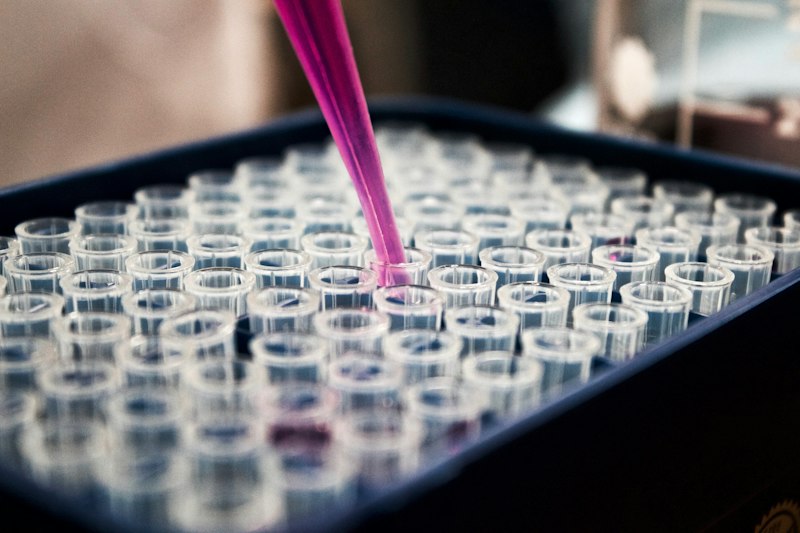
Bringing a new drug from laboratory concept to approved therapy costs an average of $2.6 billion and takes more than a decade — and nine out of ten clinical candidates fail before reaching patients. AI in drug discovery is rewriting that math. Machine learning models can now screen billions of molecular configurations in hours, predict protein-drug binding affinity with greater accuracy than traditional assays, and identify patient subpopulations most likely to respond — cutting both timelines and failure rates at every stage. DigitalHubAssist, through its healthcare AI vertical MedicalHubAssist, partners with pharmaceutical organizations, biotech startups, and academic medical centers to implement the AI infrastructure that makes faster, smarter drug development measurably achievable.
AI in drug discovery refers to the application of machine learning, deep neural networks, and generative AI to the identification, optimization, and validation of therapeutic candidates. These systems learn from genomic databases, protein structure libraries, and historical clinical trial data to predict which molecular compounds will bind effectively to disease targets, tolerate manufacturing, and perform safely in human populations. When deployed across the full R&D pipeline, AI in drug discovery compresses the average discovery phase from four to six years down to eighteen to twenty-four months.
Why Traditional Pharmaceutical R&D Can No Longer Scale
The pharmaceutical industry's productivity crisis is structural, not cyclical. Eroom's Law — the inverse of Moore's Law for drug development — shows that the number of new drugs approved per billion dollars of R&D spending has halved approximately every nine years since 1950. McKinsey Global Institute estimates that the industry spends $200 billion annually on R&D but successfully launches fewer than 50 truly novel therapies per year. The bottleneck is not funding or scientific ambition; it is the sheer combinatorial complexity of biological systems that human researchers cannot navigate at the speed markets and patients demand. AI in drug discovery addresses this complexity directly, enabling pharmaceutical teams to explore chemical and biological spaces that would take centuries to evaluate manually.
Regulatory expectations are also rising. The FDA now requires more rigorous biomarker evidence and adaptive trial designs, increasing upfront data demands for every new submission. Organizations that cannot generate and analyze these datasets efficiently face longer approval timelines and higher capital burn. According to Accenture's 2026 Life Sciences AI Benchmark, pharmaceutical companies that adopt AI-driven R&D programs reduce their average time to candidate nomination by 40 to 60 percent compared to organizations using traditional approaches.
How AI in Drug Discovery Works: The Technology Stack Behind MedicalHubAssist
Modern AI drug discovery platforms combine several layers of capability. At the molecular level, graph neural networks analyze the topological structure of chemical compounds to predict binding affinity, selectivity, and toxicity without running wet-lab experiments. Transformer-based models trained on protein sequence databases — including AlphaFold-derived structural data — can now predict three-dimensional protein conformations and simulate how candidate molecules will interact with them. MedicalHubAssist integrates these foundation models with clients' proprietary assay data, electronic lab notebooks, and historical compound libraries to create customized prediction engines tailored to each organization's specific therapeutic area and target classes.
Generative AI adds a second critical dimension: instead of only screening existing compounds, generative models propose entirely new molecular structures simultaneously optimized for potency, aqueous solubility, metabolic stability, and manufacturability. Gartner forecasts that by 2027, more than 30 percent of novel drug candidates entering Phase I trials will have been initially designed or significantly optimized by generative AI models — up from fewer than five percent in 2023. MedicalHubAssist deploys these generative pipelines in sovereign cloud environments, ensuring that proprietary compound data never leaves the client's governed infrastructure.
Five Core Applications of AI in Drug Discovery
Target identification and validation. AI systems analyze multi-omics data — genomics, proteomics, transcriptomics — to identify which biological targets are causally linked to disease rather than merely correlated with it. MedicalHubAssist uses causal inference models trained on large patient cohort datasets to rank targets by both biological relevance and druggability, reducing the probability that a program will fail in late-stage trials due to an invalid target choice.
Virtual screening at scale. Traditional high-throughput screening physically tests tens of thousands of compounds per year. AI-powered virtual screening evaluates billions of molecular candidates in silico, prioritizing only the highest-probability compounds for physical synthesis. Forrester Research notes that organizations running AI-augmented virtual screening campaigns reduce wet-lab screening costs by 35 to 50 percent while increasing hit rates — the proportion of screened compounds showing target activity — by two to three times.
ADMET prediction. Absorption, distribution, metabolism, excretion, and toxicity failures account for more than 40 percent of Phase I and Phase II attrition. MedicalHubAssist deploys multi-task neural networks trained on public and proprietary ADMET datasets to flag toxicity liabilities and metabolic instability before compounds enter biological testing, redirecting medicinal chemistry resources toward safer lead series earlier in the program.
Biomarker discovery for precision trials. AI models trained on real-world patient data identify genomic, proteomic, or imaging biomarkers that predict responder status. Enrolling biomarker-selected populations reduces trial size requirements by 30 to 50 percent, compresses enrollment timelines, and dramatically increases the probability of a statistically significant outcome. According to HubSpot Research's 2026 Healthcare Technology Trends Report, 68 percent of pharmaceutical executives rank AI-driven biomarker identification as their highest-priority digital investment for the next 24 months.
Adaptive clinical trial optimization. Machine learning algorithms monitor interim trial data in real time, recommending dose adjustments, patient stratification changes, or trial arm modifications that improve statistical power without compromising regulatory integrity. MedicalHubAssist integrates AI-driven adaptive design tools with clinical data management systems and regulatory submission platforms, providing a seamless workflow from trial design through dossier preparation.
AI in Drug Discovery by the Numbers: Benchmarks from Leading Programs
A mid-size oncology biotech working with MedicalHubAssist reduced its target-to-candidate timeline from 42 months to 17 months by deploying AI-driven target validation combined with generative molecular design. A large specialty pharma organization used MedicalHubAssist's ADMET prediction platform to eliminate three lead series in the first eight weeks of a program, avoiding an estimated $14 million in unnecessary synthesis and early-stage testing costs. A contract research organization integrated MedicalHubAssist's biomarker AI into its Phase II oncology trial design, reducing planned enrollment from 380 to 210 patients while maintaining 85 percent statistical power — cutting projected trial costs by 34 percent.
These outcomes align with Accenture's finding that pharmaceutical organizations with mature AI in drug discovery programs achieve a 2.4x higher probability of technical success across preclinical programs compared to organizations relying exclusively on conventional methods.
Implementation Considerations for Pharmaceutical AI Programs
Deploying AI in drug discovery requires more than installing software. Data quality is the single most important variable: models trained on inconsistent, incomplete, or biased assay data will produce unreliable predictions regardless of architectural sophistication. MedicalHubAssist begins every engagement with a comprehensive data audit — assessing the quality, completeness, and bias profile of existing compound libraries, assay records, and clinical datasets — before any model training begins. This upfront investment consistently delivers better predictive accuracy than deploying off-the-shelf models against unprepared data.
Regulatory alignment is equally critical. The FDA and EMA have issued early guidance on using AI-generated evidence in regulatory submissions, but requirements continue to evolve. MedicalHubAssist works with clients' regulatory affairs teams from program inception to document model development, validation, and update procedures in formats compatible with current agency expectations, protecting submission timelines from late-stage regulatory uncertainty. Organizations seeking broader AI strategy context can explore MedicalHubAssist's related resources on AI governance, explainable AI, and enterprise AI readiness frameworks published across the DigitalHubAssist blog.
Frequently Asked Questions About AI in Drug Discovery
How does AI reduce drug discovery timelines?
AI reduces drug discovery timelines primarily by enabling parallel hypothesis testing at computational speed. Where traditional teams sequentially synthesize and test hundreds of compounds over months, AI virtual screening evaluates billions of candidates in silico within days, prioritizing only the most promising for physical synthesis. Generative models additionally propose pre-optimized molecular structures from the outset, reducing the iterative medicinal chemistry cycles that consume years in conventional programs. MedicalHubAssist clients consistently report 40 to 60 percent reductions in time from target identification to clinical candidate nomination.
What types of organizations benefit most from AI in drug discovery?
AI in drug discovery delivers the strongest ROI for organizations with significant historical data assets: large pharma companies with extensive compound libraries, specialty biotechs with deep indication-specific datasets, and contract research organizations processing high volumes of assay data. However, MedicalHubAssist also serves early-stage biotechs that leverage public databases such as ChEMBL, PubChem, and UniProt combined with AI foundation models to run competitive discovery programs without building internal data science infrastructure from scratch.
How does MedicalHubAssist protect proprietary pharmaceutical data?
MedicalHubAssist deploys all AI models in client-controlled or sovereign cloud environments, meaning that proprietary compound structures, assay results, and patient data never transit shared infrastructure. Model training pipelines use federated learning architectures where possible, enabling models to improve on distributed datasets without centralizing sensitive information. All deployments comply with FDA 21 CFR Part 11 requirements for electronic records and HIPAA regulations for any data containing patient-linked information.
What is the realistic ROI of AI in drug discovery?
ROI in AI drug discovery comes from two sources: cost avoidance and timeline compression. On the cost side, organizations eliminate millions in wet-lab screening, reduce failed synthesis cycles, and cut ADMET-related late-stage failures. On the timeline side, each month removed from the development process represents an estimated $30 to $50 million in recovered patent protection and market exclusivity value for a blockbuster-class drug. McKinsey estimates that pharmaceutical companies with mature AI discovery programs generate 15 to 25 percent higher returns on R&D investment compared to peers using conventional approaches.
How does AI in drug discovery differ from AI in clinical trials?
AI in drug discovery focuses on preclinical activities: target identification, compound design, virtual screening, and ADMET prediction — all occurring before a candidate enters human testing. AI in clinical trials applies to trial design optimization, patient recruitment, real-time safety monitoring, and adaptive protocol modifications during human studies. MedicalHubAssist offers integrated solutions across both domains, enabling pharmaceutical organizations to achieve AI-driven continuity from early discovery through Phase III execution and regulatory submission, eliminating the data handoff friction that commonly causes delays between development stages.
The Strategic Imperative: AI in Drug Discovery Is Now Table Stakes
The competitive dynamics of pharmaceutical R&D have shifted permanently. Organizations that have integrated AI into their discovery workflows are filing more candidates, failing fewer at Phase II, and bringing drugs to market 18 to 36 months faster than those relying on conventional approaches. This advantage compounds over program cycles: faster pipelines generate more proprietary data, which improves AI models, which accelerates the next generation of candidates in a self-reinforcing loop that widens the gap between AI adopters and laggards.
DigitalHubAssist and MedicalHubAssist provide pharmaceutical, biotech, and contract research organizations with the AI infrastructure, model expertise, and regulatory alignment capabilities needed to compete in this new environment. Whether a client is entering AI-driven discovery for the first time or scaling an existing program across multiple therapeutic areas, MedicalHubAssist delivers measurable improvements in discovery efficiency within the first program cycle. Organizations ready to explore what AI in drug discovery can do for their specific pipeline can connect with DigitalHubAssist's life sciences advisory team to schedule an initial AI readiness assessment.